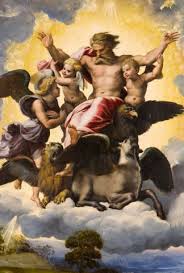
The exhibition of Raffaello's masterpieces in
Venaria Reale (Turin) shows the paintings and the works of the artist
which marked the main steps of his brilliant career- the people he
met (his father Giovanni Santi, Perugino, Pinturicchio, Luca
Signorelli , Leonardo and Michelangelo) and the different cities
where he lived.
Le opere di
Raffaello a Venaria Reale (Torino) mostrano i capolavori
dell'artista che segnarono le tappe fondamentali della sua
prodigiosa carriera: le persone che incontrò (suo padre Giovanni
Santi, il Perugino, il Pinturicchio, Luca Signorelli , Leonardo e
Michelangelo) e le città dove visse .
Showing posts with label laNOTTE. Show all posts
Friday, 8 January 2016
Wednesday, 6 January 2016
Sunday, 13 December 2015
visita - il pane dei boia
Executioners once again...
The executioners inspired also the invention of pan carré....the bakers were quite disgusted to sell bread to executioners and showed their blame handing them out the loaves upside down. The hangmen were furious and wrote to Turin Major who proclaimed that the bakers had to give the bread on the right way. The bakers had an idea: they made a parallelepiped bread with four equal sides…….
Di nuovo i boia...che hanno ispirato anche i panettieri!
A Torino i panettieri erano disgustato dal fatto di vendere il pane ai boia. Dimostravano il loro dispregio porgendo loro le pagnotte al contrario. I boia si lamentarono con il sindaco che decretò che i panettieri dovevano porgere il pane nel senso giusto anche ai boia. I panettieri allora ebbero un'idea: fecero un pane a forma di parallelepipedo con tutti i lati uguali.......
Saturday, 24 October 2015
visita - danzare a Torino
Loredana Furno is an Italian ballerina and choreographer. Born in Turin, she studied architecture for two years and then started dancing under Susanna Egri. After a beginning as a soloist in numerous shows under Susanna Egri, she joined the corps de ballet of La Scala and toured through Europe. In 1964 she became the prima ballerina at Teatro Regio in Turin. In 1977 Furno founded her own company, Teatro de Torino, staging new works as well as the classics.
http://www.noidonne.org/blog.php?ID=00197
http://www.dancehallnews.it/loredana-furno-la-signora-della-danza-torinese-si-racconta-tra-passato-e-presente/
Loredana Furno è una ballerina Italiana, nata a Torino, che dopo avere studiato per due anni architettura si è dedicata totalmente alla danza. Dapprima come solista sotto la guida di Susanna Egri, Loredana Furno si unì al balletto della Scala di Milano e girò i palcoscenici europei. Nel 1964 divenne prima ballerina del Teatro Regio di Torino e nel 1977 ha fondato la sua compagnia Teatro di Torino in cui insegna non solo danza classica., ma moderna e contemporanea
Sunday, 2 August 2015
visita - Tamara de Lempicka in Turin
![]() |
| Girl in Green |
Tamara Łempicka, mainly famous as Tamara de Lempicka (1898 –1980) was a Polish Art Deco painter. She became the leading representative of the Art Deco style both in Europe and in America and was one of the favourite artists of many Hollywood stars. Called 'the baroness with a brush', Tamara de Lempicka was the portrait painter of her generation among the haute bourgeoisie and aristocracy, painting duchesses and grand dukes and socialites and displayed her paintings in the most elite salons of the era. Now many of her paintings are displayed in Turin, in Palazzo Chiablese, Polo Reale.
www.mostratamara.it/
www.lastampa.it/2015/04/09/.../de-lempicka...torino.../pagina.
Go to our Catalogue for Ebooks and Stories
![]() |
| foto di Dora Kallmus |
Go to our Catalogue for Ebooks and Stories
Wednesday, 24 June 2015
visita: La Tesoriera
![]() |
| La Tesoriera |
La Tesoriera hides some mysteries and once was called The Garden of the Devil: a ghost wearing a black cloak with red hedge wanders in the nearby country at night and a young woman has been seen walking through the ancient, elegant halls of the palace for 20 years.
Go to our Catalogue for Ebooks and Stories
![]() |
| La Tesoriera |
La Tesoriera nasconde dei segreti ed è stata associata alla figura del diavolo, tanto che il parco della villa fu chiamato I Giardin del Diav: il fantasma di un cavaliere solitario in un mantello nero bordato di rosso esce dalla villa nella notte e vaga per la campagna circostante, e una giovane ragazza si aggira per le antiche sale.
Go to our Catalogue for Ebooks and Stories
Saturday, 2 May 2015
Tuesday, 7 April 2015
Visita- Orientalism in Turin
![]() |
| Bazar in Konstantinople |
http://foglidarte.blogspot.it/2014/06/alberto-pasini-un-pittore-ottocentesco.html
Go to our Catalogue for Ebooks and Stories
Versione Italiana
![]() |
| Interior of a Mosque in Cordova |
La curiosità verso terre lontane non spinse solo archeologi e collezionisti a viaggiare in oriente, ma anche artisti. Un esempio è il pittore parmense Alberto Pasini (Busseto 3 settembre 1826 – Cavoretto , 15 dicembre 1899) che, dopo aver frequentato alcune scuole d'arte e avere soggiornato a Torino per studi, fu affascinato dal movimento Orientalista – nato nel 19° secolo in seguito alla spedizione di Napoleone in Egitto e all'espansione coloniale europea. Pasini intraprese un viaggio al seguito di una spedizione diplomatica francese verso Egitto, Turchia, Persia e Arabia nel 1855. Durante questo periodo eseguì circa sessanta disegni e molti schizzi che diventarono poi pitture quando ritornò in Europa, in Francia e poi in Italia.
http://foglidarte.blogspot.it/2014/06/alberto-pasini-un-pittore-ottocentesco.html
Tuesday, 17 March 2015
Visita- the temple of the cinema
Per la Versione Italiana
The Mole Antonelliana also hosts The National Cinema Museum which is unique in the world as it offers objects which made the history of photography, artifacts of the pre-cinema era and a panoramic view of the technical, scientific and artistic paths that led to the birth of cinema together with different scientific and educational activities. The idea for the National Cinema Museum was conceived in 1941 when Maria Adriana Prolo planned the creation of a space totally dedicated to the documentation of Torino’s film industry. First opened in Palazzo Chiablese, a wing of the Royal Palace, was closed in 1985 for safety reasons, and riopened in 2000 inside the Mole Antonelliana, The Swiss set designer François Confino who has arranged the various halls said that the museum is “[...] a temple of cinema in a place of exceptional architectural caliber, a conspiratorial and inviting tribute to the Mole Antonelliana."
![]() |
| The MOLOCH |
http://museonazionalecinema.blogspot.it/
mondo in quanto espone gli oggetti che fecero la storia della fotografia, dall'era pre-cinematgrafica e una panoramica di tutti gli sviluppi tecnici ed artistici ed offre attività di tipo scientifico ed educativo. L'idea del Museo venne a Maria Adriana Prolo quando, nel 1941, pensò di realizzare uno spazio dedicato alla documentazione dell'industrai cinematografica di Torino. Dapprima a Palazzo Chiablese, ala di Palazzo Reale, poi chiuso per moticvi di sicurezza nel 1985, fu riaperto nel 2000 all'interno delle Mole. Il designer svizzerò François Confino che ne ha progettato le sale l'ha definito "[...] un tempio del cinema all'interno di un luogo di eccezionale elevatura architettonica, un autentico tributo alla Mole Antonelliana"Go to our Catalogue for Ebooks and Stories
Monday, 16 February 2015
Visita- faith and religion
Per la Versione Italiana
![]() |
| Gran Madre |
http://italiainsolita.blogspot.it/2014/12/i-segreti-della-gran-madre-di-torino.html
http://www.duepassinelmistero.com/Gran%20Madre.htm
Go to our Catalogue for Ebooks and Stories
Versione Italiana
![]() |
| Faith and the Calice |
http://italiainsolita.blogspot.it/2014/12/i-segreti-della-gran-madre-di-torino.html
http://www.duepassinelmistero.com/Gran%20Madre.htm
Go to our Catalogue for Ebooks and Stories
Sunday, 1 February 2015
Visita - The Balon in Turin
Per la Versione Italiana
“It is such a mess of things and junks that anyone who would attempt an inventory would get mad”
(Edmondo De Amicis, from Hopes and Glories. The Three Capitals, 1911)
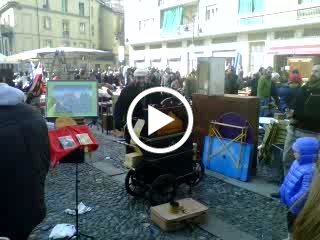
The Balôn market is a famous flea market in Turin near the other market called Porta Palazzo. The name probably comes from the first air balloon that took off from this neighbourhood in the 18th century. Other sources state that the name instead dates back to an old designation of the area during the French siege, Faubourg de Balon because people met there to play. Every Saturday morning the Balon attracts a crowd of browsers, collectors, and tourists who walk around the most diverse objects. On the second Sunday of the month is the Gran Balôn’s turn: from toys to antique furniture, from lace to collector’s items, a variety of options that make this market an attraction for people coming from all over Italy
http://www.comune.torino.it/torinoplus/english/viveretorino/mercati/Balon/index.shtml
http://it.wikipedia.org/wiki/Balon
http://www.italianways.com/turins-balon-market/
Versione Italiana
« È una tale confusione di cose e d'avanzi di cose da far impazzire il disgraziato che ne dovesse far l'inventario. »
(Edmondo De Amicis, from Speranze e glorie. Le tre capitali, 1911)
Il Balon è lo storico mercato delle pulci di Torino compreso nel quartiere Aurora, nel Borgo Dora e vicino al mercato di Porta Palazzo. Il nome deriverebbe da Il Borgo del Pallone che durante l’assedio di Torino da parte dei Francesi nel 1706 sarebbe stato Faubourg de Balon, in quanto nel borgo la gente si incontrava per motivi ludici come il gioco delle bocce. Secondo la tradizione popolare, invece, balon deriverebbe dal decollo nella zona della prima mongolfiera.
Dagli anni ottanta è stato istituito anche il Gran Balon, che si tiene la seconda domenica di ogni mese e a cui partecipano 250 espositori e i numerosi negozi di antiquariato della zona.
“It is such a mess of things and junks that anyone who would attempt an inventory would get mad”
(Edmondo De Amicis, from Hopes and Glories. The Three Capitals, 1911)
![]() |
| Poster of Gran Balon |
Go to our Catalogue for Ebooks and Stories
http://www.comune.torino.it/torinoplus/english/viveretorino/mercati/Balon/index.shtml
http://it.wikipedia.org/wiki/Balon
http://www.italianways.com/turins-balon-market/
Versione Italiana
« È una tale confusione di cose e d'avanzi di cose da far impazzire il disgraziato che ne dovesse far l'inventario. »
(Edmondo De Amicis, from Speranze e glorie. Le tre capitali, 1911)
![]() |
| il mercato |
Il Balon è lo storico mercato delle pulci di Torino compreso nel quartiere Aurora, nel Borgo Dora e vicino al mercato di Porta Palazzo. Il nome deriverebbe da Il Borgo del Pallone che durante l’assedio di Torino da parte dei Francesi nel 1706 sarebbe stato Faubourg de Balon, in quanto nel borgo la gente si incontrava per motivi ludici come il gioco delle bocce. Secondo la tradizione popolare, invece, balon deriverebbe dal decollo nella zona della prima mongolfiera.
Dagli anni ottanta è stato istituito anche il Gran Balon, che si tiene la seconda domenica di ogni mese e a cui partecipano 250 espositori e i numerosi negozi di antiquariato della zona.
Go to our Catalogue for Ebooks and Stories
Wednesday, 28 January 2015
Visita- Museo Egizio
The reason why the Egyptian museum of Turin is the second biggest in the world after Cairo Museum do not refer only to its legendary origins. The interest for Egypt was born in the Savoy monarchs when, in 1629, they bought from the Gonzaga' family, a bronze table adorned with Egyptian gods and in the centre the goddess Isis, the Mensa Isiaca. It was a remake, but it marked the beginning of a passion.
Go to our Catalogue for Ebooks and Stories
In 1759 Carlo Emanuele III asked the botanic professor Vitaliano Donati to bring back some relics from his journey to Egypt . In 1824 Carlo Felice bought from Bernardino Drovetti, a Napoleonic diplomatic and collector, a great part of his Egyptian relics for about 4000.000 lira, now 700 euros.
Go to our Catalogue for Ebooks and Stories
The relics came to Turin from Genoa on cards dragged by horses in the freezing winter 1823. It was the beginning of the Egyptian Museum, the first in the world.
http://countrybred.com/countrybred/the-egyptian-museum-of-turin/
http://www.monithon.it/blog/2014/04/21/monithon-museo-egizio-di-torino-appunti-e-riflessioni-2/
Versione Italiana
Perché proprio a Torino c’è il secondo museo egizio più grande al mondo? A parte le leggendarie origini egizie, I Savoia iniziarono ad interessarsi dell'Egitto nel 1629 quando acquistarono dalla famiglia Gonzaga una tavola di bronzo ornata di divinità egizie incise in oro e argento e al centro la dea Isi, la Mensa Isiaca.
Oggi è noto che si trattava di un rifacimento, ma instillò la passione nei sovrani della dinastia piemontese. Carlo Emanuele III chiese al botanico Vitaliano Donati di riportare dall'Egitto qualche reperto al ritorno dall'Egitto nel 1759.
Go to our Catalogue for Ebooks and Stories
In seguito, nel 1824, Carlo Felice acquistò da Bernardino Drovetti diplomatico napoleonico, e collezionista una parte cospicua delle sue collezioni di reperti egizi per l’ enorme somma di per circa 400 mila lire, ossia 700 milioni di euro. I pezzi giunsero sul finire del 1823 nella capitale sabauda da Genova su carri trainati dai cavalli in pieno inverno, e diedero inizio alla gloriosa storia del Museo Egizio di Torino, il primo a nascere nel mondo.
http://www.museoegizio.it/
http://countrybred.com/countrybred/the-egyptian-museum-of-turin/
http://www.monithon.it/blog/2014/04/21/monithon-museo-egizio-di-torino-appunti-e-riflessioni-2/
Monday, 12 January 2015
atNIGHT- Who created the Detective Story?
Per la Versione Italiana
![]() |
| Cover of the novel The Notting Hill Mystery |
The Gothic novel started the mystery genre, but who was the first detective story writer? Most critics state that he was Edgar Allan Poe whose fertile imagination created inspector August Dupin. T. S. Eliot, poet and critic, supports that the first was instead Wilkie Collins, Charles Dickens' close friend and author of The Moonstone.
As a matter of fact, a test which dealt with mystery and detection had already appeared in installments on the magazine Once a Week (Edited by C. Dickens) on December 27, 1862, The Notting Hill Mystery. The author was unknown as the novel was written under pseudonymous. It was supposed to be Charles Warren Adams (1833-1903), a lawyer, author of mysterious stories.
![]() |
| Illustration of the Novel on the magazine once a Week |
The Notting Hill Mystery is about the adventures of an insurance agent, Ralph Henderson, who must investigate on Baron R suspected of his wife's murder. She died after drinking an acid taken from his husband's laboratory. The Baron is surely involved, but he evidences are not found. While investigating, the agent discovers other murders, all of them seem to have the Baron's mark. The truth will be unveiled thanks to letters, sheets of diaries, maps of the murder scene: techniques now quite familiar, but very unusual for the Victorian readers. The novel, forgotten for a long period, had now been published again on its 150th anniversary.
![]() |
| La rivista Once a Week |
Il Gotico ha aperto la via al tema del mistero....ma qual è stato il primo vero giallo cronologicamente parlando? In molti pensano che il primo detective della storia sia stato Monsieur Dupin creato da Edgar Allan Poe. Secondo il poeta e critico T. S. Eliot il primo vero giallo fu varato da Wilkie Collins con La Pietra Di Luna.
Ma un misterioso testo era già stato pubblicato The Notting Hill Mystery che apparve per la prima volta a puntate sulle pagine della rivista Once A Week (Una Volta alla settimana, pubblicazione curata da C. Dickens) il 27 dicembre 1862, illustrato da George du Maurier, nonno della poi famosa scrittrice del mistero Daphne Du Maurier. L’autore rimase pressoché sconosciuto per molti anni in quanto la firma Charles Felix era uno pseudonimo. Nel 1952 William Buckler suggerì che poteva essere Charles Warren Adams (1833-1903), un avvocato già autore di altre storie del mistero, ipotesi confermata da studiosi e critici.
Go to our Catalogue for Ebooks and Stories
![]() |
| Illustrazione del romanzo sulla rivista Once a Week |
Comunque The Notting Hill Mystery (Il mistero di Notting Hill), ora considerato il capostipite dei gialli, racconta le avventure dell’agente investigativo delle assicurazioni Ralph Henderson nel caso contro il Barone "R___", sospettato dell'omicidio della moglie. La donna sembrava avesse bevuto casualmente una bottiglia di acido nel laboratorio del marito durante uno dei suoi giri notturni da sonnambula. Il marito viene sospettato perché ha stipulato ben cinque assicurazioni sulla vita della moglie. Mentre investiga, Henderson scopre altri tre omicidi …. La colpevolezza del barone è evidente, ma sembra impossibile trovare le prove. La verità sarà scoperta attraverso lettere e diari, deposizioni, rapporti di chimica, mappe sulla scena del delitto: tecniche ora comuni, ma all’epoca davvero innovative. Per molto tempo il testo è stato, dimenticato, solo per il suo 150° anniversario è stato ripubblicato con le stesse immagini apparse nella sua forma originale del 1863.
Monday, 29 December 2014
atNIGHT- a dangerous diamond
Per la Versione Italiana
The diamond has a great religious meaning and is searched by three Hindus who have devoted their lives to recover the it. To solve the intricate case is Sergeant Cuff, a solitary detective in retirement with a passion for roses. Sergent Cuff was one of the first investigators inspired by the real detective involved in the horrible murder of Road Hill House, Mr. Jonathan Whicher.
T. S. Eliot definì primo vero romanzo poliziesco della letteratura inglese The Moonstone, La Pietra di Luna (1868) di Wilkie Collins (1824 – 1889) che uscì in Inghilterra nel 1868 a puntate sul periodico di Londra All the Year Round il cui direttore era Charles Dickens.
![]() |
| The Great Exhibition (1851) |
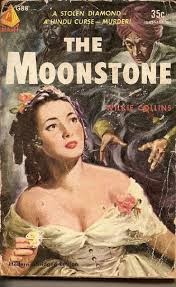
The Moonstone (1868) by Wilkie Collins, published on the London magazine All the Year Round directed by C. Dickens, was seen by the poet and critic T. S. Eliot as the first real detective story in literature. It deals with the theft of a notorious diamond, the Moonstone, occurred during the eighteenth birthday party of Rachel Verinder - the jewel is a gift to Rachel by his uncle, an unscrupulous officer of the British Army in India.
DOWNLOAD diCARTA ebook FROM HERE
![]() |
| A cover of W. Collin's The Moonstone |
The diamond has a great religious meaning and is searched by three Hindus who have devoted their lives to recover the it. To solve the intricate case is Sergeant Cuff, a solitary detective in retirement with a passion for roses. Sergent Cuff was one of the first investigators inspired by the real detective involved in the horrible murder of Road Hill House, Mr. Jonathan Whicher.
DOWNLOAD diCARTA ebook FROM HERE
The Moonstone mixes important historical events with mystery. The action takes place in the years 1848-49, at the time of the second Anglo-Sikh War in India, which established British control over that country and marked the beginning of "the empire" of the East India Company. The great diamond refers to two very famous stones: the Russian "Orloff" (the diamond in the Russian Imperial Sceptre) and the "Koh-i-Noor" (the Persian "mountain of light"), both stolen by Europeans.
![]() |
| Copertina di La Pietra di Luna di W Collins |
T. S. Eliot definì primo vero romanzo poliziesco della letteratura inglese The Moonstone, La Pietra di Luna (1868) di Wilkie Collins (1824 – 1889) che uscì in Inghilterra nel 1868 a puntate sul periodico di Londra All the Year Round il cui direttore era Charles Dickens.
Subito dopo una festa di compleanno, un gioiello viene rubato; si tratta di un gioiello molto prezioso la cui sparizione mette a nudo la vita di un uomo onesto e insospettabile, rivela l’ipocrisia di certe regole sociali e l’arroganza della civiltà occidentale che basa i suoi valori sul materiale e il commerciabile.
La pietra di luna, così importante per i rabbini per la loro religione, diventa simbolo di potere e ricchezza in occidente, dove il suo valore prende un’importanza di tipo puramente economico. Il giallo diventa quindi un modo per avvicinare o contrapporre culture diverse, per sottolineare le disparità sociali ed evidenziare idiosincrasie e manie nascoste. Inoltre il personaggio dell'investigatore chiamato a risolvere si ispira al vero ufficiale di polizia Mr. Jonathan Whicher che si era occupato dell'orribile omicidio di Road Hill House, un uomo schivo e solitario, amante dei fiori.
DOWNLOAD diCARTA ebook FROM HERE
![]() |
| Victorian interior |
La pietra di luna, così importante per i rabbini per la loro religione, diventa simbolo di potere e ricchezza in occidente, dove il suo valore prende un’importanza di tipo puramente economico. Il giallo diventa quindi un modo per avvicinare o contrapporre culture diverse, per sottolineare le disparità sociali ed evidenziare idiosincrasie e manie nascoste. Inoltre il personaggio dell'investigatore chiamato a risolvere si ispira al vero ufficiale di polizia Mr. Jonathan Whicher che si era occupato dell'orribile omicidio di Road Hill House, un uomo schivo e solitario, amante dei fiori.
Saturday, 20 December 2014
laNOTTE- Road House's secrets
Per la Versione Italiana
![]() |
| Road Hill House |
An inspiration while writing diCARTA was the story of a terrible murder occurred in England in June 1860. Three-year-old Saville Kent is found at the bottom of an outdoor privy with his throat cut. England is terrified and everyone tries to solve the mystery.
Go to our Catalogue for Ebooks and Stories
![]() |
| The cover of the novel |
To investigate the crime is called the greatest detective in the country, Inspector Jonathan Whicher. According to him, the guilty party is Constance, the plain, gloomy, teenage half-sister of little Saville Kent. And he is right, but the public opinion uproars in bewilderment and destroys the career of the detective. Five years later the girl confesses her crime, becoming one of the best-known names in England. As to Inspector Jonathan Whicher, heis still living on in fiction, as his figure has been an example for the all-knowing and all-seeing detectives nature loving such as Wilkie Collins’s Sgt. Cuff in The Moonstone, Sir Arthur Conan Doyle’s Sherlock Holmes, Agatha Christie’s Hercule Poirot, Dashiell Hammett’s Sam Spade and Rex Stout’s Nero Wolf.
Go to our Catalogue for Ebooks and Stories
The Suspicions of Mr. Whicher reads like the best of Victorian thrillers; Kate Summerscale has revived the mystery of Road Hill House depicting not only a crime, but the atmosphere of the period, the curiosity and the involvement of the English people, the attraction for what is criminal and macabre and the middle class society beyond the elegant and respectable façade - scheming servants, rebellious children, insanity jealousy, and hatred.
Versione Italiana

The Murderer
Constance Kent
Una delle influenze durante la creazione di diCARTA è stato il libro Omicidio a Road Hill House. Un delitto avvenuto nell’estate 1860 scuote
l’opinione pubblica: Saville Kent, di tre anni, viene rapito e
subito dopo trovato con la gola tagliata vicino alla sua abitazione.
Tutti gli abitanti della elegante casa di Road Hill House in
Wiltshire sono interrogati e dall’inchiesta emergono i particolari
di una famiglia in apparenza inattaccabile: figli ribelli, tresche
clandestine, solitudine, pazzia, gelosia e servitù intrigante. Il
mistero s’infittisce e viene chiamato un detective di Londra, un
giovane promettente, Jonathan Whicher, che già si era fatto notare
in precedenza per il suo acume.

Constance Kent
Go to our Catalogue for Ebooks and Stories
![]() |
| Book cover |
Il libro Omicidio a Road Hill House di Kate Summerscale (2008) mette in luce proprio come questo semplice poliziotto amante della campagna, solitario e timido rimarrà nella memoria collettiva ispirando molti dei famosi detective delle letteratura gialla e del mistero a partire dal sergente Cuff descritto da Wilkie Collins in La Pietra di Luna, all’immortale Sherlock Holmes create da Sir Arthur Conan Doyle e poi Hercule Poirot di Agatha Christie, Nero Wolf di Rex Stout o Sam Spade di Dashiel Hammet. Da questa letteratura nasce la passione per il noir e l'e-book diCarta.
www.ilmiolibro.kataweb.itwww.women.it
Subscribe to:
Posts (Atom)


.jpeg)
.jpeg)

.jpeg)

.jpeg)


.jpeg)
.jpeg)
.jpeg)


.jpeg)

.jpeg)