Showing posts with label librodigitale. Show all posts

Tuesday, 7 April 2015

Visita- Orientalism in Turin

Bazar in Konstantinople
Far off Eastern countries did not only attract archeologists and collectors but also visual artists. An example is Alberto Pasini (1826 – 1899) who, after attending schools of arts and after a period spent in Turin for his studies, was attracted by Orientalism, a romantic movement which was born after the Napoleonic expedition to Egypt and that increased with the expansion of European colonialism. In 1855 started his long journey with a French diplomatic mission through Turkey, Persia, Araby and Egypt. During this long trip he drew about 60 studies and many sketches which became paintings back in France and then in Italy.   


http://foglidarte.blogspot.it/2014/06/alberto-pasini-un-pittore-ottocentesco.html

Go to our Catalogue for Ebooks and Stories


Versione Italiana

Interior of a Mosque in Cordova
La curiosità verso terre lontane non spinse solo archeologi e collezionisti a viaggiare in oriente, ma anche artisti. Un esempio è il pittore parmense  Alberto Pasini (Busseto 3 settembre 1826 – Cavoretto , 15 dicembre 1899) che, dopo aver frequentato alcune scuole d'arte e avere soggiornato a Torino per studi, fu affascinato dal movimento Orientalista – nato nel 19° secolo in seguito alla spedizione di Napoleone in Egitto e all'espansione coloniale europea. Pasini intraprese un viaggio al seguito di una spedizione diplomatica francese verso Egitto, Turchia, Persia e Arabia nel 1855. Durante questo periodo eseguì circa sessanta disegni e molti schizzi che diventarono poi pitture quando ritornò in Europa, in Francia e poi in Italia.
http://foglidarte.blogspot.it/2014/06/alberto-pasini-un-pittore-ottocentesco.html

Tuesday, 17 March 2015

Visita- the temple of the cinema

 Per la Versione Italiana
The MOLOCH 
The  Mole Antonelliana also hosts  The National Cinema Museum  which  is unique in the world  as it offers objects which made  the history of photography, artifacts of the  pre-cinema era and  a panoramic view of the technical, scientific and artistic paths that led to the birth of cinema together with different scientific and educational activities. The idea for the National Cinema Museum was conceived in 1941 when Maria Adriana Prolo planned the creation of a space totally dedicated to the documentation of Torino’s film industry. First opened in Palazzo Chiablese, a wing of the Royal Palace, was closed in 1985 for safety reasons,  and riopened in 2000 inside the Mole Antonelliana, The  Swiss set designer François Confino who has arranged the various halls said that the  museum  is  “[...] a temple of cinema in a place of exceptional architectural caliber, a conspiratorial and inviting tribute to the Mole Antonelliana." 
http://museonazionalecinema.blogspot.it/
Museum of the Cinema - inside
La Mole Antonelliana ospita anche il Museo del Cinema,  unico al
mondo in quanto espone gli oggetti che fecero la storia della fotografia, dall'era pre-cinematgrafica e una panoramica di tutti gli sviluppi tecnici ed artistici ed offre attività di tipo scientifico ed educativo. L'idea del Museo venne a Maria Adriana Prolo quando, nel 1941, pensò di realizzare uno spazio dedicato alla documentazione dell'industrai cinematografica di Torino. Dapprima a Palazzo Chiablese, ala  di Palazzo Reale, poi chiuso per moticvi di sicurezza nel 1985,  fu riaperto nel 2000 all'interno delle Mole. Il designer svizzerò François Confino che ne ha progettato le sale l'ha definito "[...] un tempio del cinema all'interno di un luogo di eccezionale elevatura architettonica, un autentico tributo alla Mole Antonelliana"

Go to our Catalogue for Ebooks and Stories


Monday, 16 February 2015

Visita- faith and religion


Per la Versione Italiana
Gran Madre
On the other side of the Po there is an  imposing Neoclassical church – La Gran Madre di Dio. It was designed by the  architect was Ferdinando Bonsignore to celebrate the end of Napoleonic rule and the return of the Savoy king Vittorio Emanuele the 1st (his statue stands in front of the steps) . The position on the banks of the River Po, the structure similar to the Pantheon , its peculiar dedication and  the occult symbols hidden inside have given rise to various legends.  Some historians date its origin to the Egyptian time: the church would stand on the site of a temple to the Egyptian goddess Isis  –the name Great Mother of God, refers to her. Also the two statues on either sides of the steps are curious: the one on the right represents  Religion and the other on the left Faith. Faith is holding a chalice which some believe to be a reference to the Holy Grail, the cup where Christ drank during his last supper and where Giovanni D’Arimatea collected his holy blood after Christ’s deposition. According to some stories the Grail  could be  buried nearby, some others maintain that the statue itself is looking at the place where the cup is hidden – but the eyes of Faith have no pupils.

http://italiainsolita.blogspot.it/2014/12/i-segreti-della-gran-madre-di-torino.html
http://www.duepassinelmistero.com/Gran%20Madre.htm

Go to our Catalogue for Ebooks and Stories


Versione Italiana
Faith and the Calice
Dall'altra parte del Po c'è un imponente chiesa neoclassica: La Gran Madre di Dio. Fu disegnata dall'architetto Ferdinando Bonsignore per celebrare la fine dell'epoca  Napoleonica ed il ritorno Emanuele 1°la cui statua è eretta davanti alla scalinata. La sua posizione sulla riva del fiume, la struttura somigliante al  Pantheon,  la sua particolare dedica e i simboli occultati all'interno hanno dato adito a molte leggende. Alcuni storici datano le sue origini all'epoca egizia: la chiesa sarebbe stata eretta sul luogo dove già si trovava un tempio dedicato ad Isis e, appunto, il nome Gran Madre si riferirebbe a Lei. Anche le due statue sui due lati della scalinata sono molto particolari: quella a destra rappresenta la Religione, quella a sinistra la Fede. La Fede tiene in mano un calice che si pensa sia un riferimento al Santo Graal, la coppa dove Cristo bevve durante l'ultima cena e dove Giovanni D'Arimatea raccolse il sangue di Cristo dopo la sua deposizione. Secondo alcune storie il Graal potrebbe essere sepolto lì vicino,;altri sostengono che la statua guardi verso il luogo dove il Graal sarebbe nascosto – ma gli occhi della statua non hanno pupille.
http://italiainsolita.blogspot.it/2014/12/i-segreti-della-gran-madre-di-torino.html
http://www.duepassinelmistero.com/Gran%20Madre.htm

Go to our Catalogue for Ebooks and Stories


Wednesday, 11 February 2015

Visita- Il Santo Graal

Per la Versione Italiana

The Saint Grail
land the Knights of the Round Table 

Turin is also the city of White Magic: it is the place where there is the Holy Sindone, the shroud which wrapped Christ's body in his sepulchre. It is said that Christ's relics are all together. If this is true, in Turin there is also the Saint Grail, the cup in which Christ drank during his last supper and Giovanni D’Arimatea collected his holy blood after Christ’s deposition. 


Go to our Catalogue for Ebooks and Stories


Two statues would testify this theory, the ones which stand on both sides of the steps of the Gran Madre, the large church built on the river Po's banks. The one on the right represents Religion and the other on the left Faith. Faith is holding a chalice which some believe to be a reference to the Holy Grail,. According to some stories the Grail could be buried nearby, some others maintain that the statue itself is looking at the place where the cup is hidden – but the eyes of Faith have no pupils.

https://www.google.com/maps/d/u/0/viewer?oe=UTF8&ie=UTF8&msa=0&mid=z-hVrj1D2sy4.khpGpHzBedA0

Go to our Catalogue for Ebooks and Stories


Christ during his last supper 

Torino è sì la città della magia nera, ma anche di quella bianca, la città dove c’è la sacra sindone. Secondo la tradizione esoterica, chi possiede una delle reliquie di Cristo le possiede tutte. La presenza della Sindone a Torino, quindi, garantirebbe alla città la presenza degli altri simboli della cristianità. Di qui la convinzione che a Torino si conservi anche il sacro Graal. 


Go to our Catalogue for Ebooks and Stories

La leggenda vuole che dopo il suo ritrovamento, i primi uomini lo lavorarono fino a farlo diventare un gradale, un calice, il Santo Graal, appunto, usato poi da Giuseppe D’Arimatea per custodire il sangue di Cristo dopo la crocifissione. Due statue a Torino, sarebbero la prova di questa esistenza. Una è la Fede, davanti alla Gran Madre, sulla sinistra, che impugna un calice con la mano destra e lo alza al cielo. 

Go to our Catalogue for Ebooks and Stories

L’altra sarebbe proprio in direzione dello sguardo di Fede, a Palazzo di Città, ove vi sono cesellati nel muro disegni raffiguranti altri calici. Secondo la giornalista storica Giuditta Dembech, autrice di “Torino città magica”, queste interpretazioni del mito del Graal non sono corrrette in quanto il calice non è un qualcosa di materiale, ma sarebbe la rappresentazione della conoscenza perduta dopo il peccato originario nel giardino dell’Eden.

www.torinocuriosa.it/curiosita.php?cdcur=22

Sunday, 1 February 2015

Visita - The Balon in Turin

Per la Versione Italiana
“It is such a mess of things and junks that anyone who would attempt an inventory would get mad”
(Edmondo De Amicis, from Hopes and Glories. The Three Capitals, 1911)


Poster of Gran Balon
The Balôn market is a famous flea market in Turin near the other market called Porta Palazzo.  The name probably comes from the first air balloon that took off from this neighbourhood in the 18th century. Other sources state that the name instead dates back to an old designation of the area during the French siege, Faubourg de Balon because people met there to play. Every Saturday morning the Balon attracts a crowd of browsers, collectors, and tourists who walk around the most diverse objects. On the second Sunday of the month is the Gran Balôn’s turn: from toys to antique furniture, from lace to collector’s items, a variety of options that make this market an attraction for people coming from all over Italy

Go to our Catalogue for Ebooks and Stories


http://www.comune.torino.it/torinoplus/english/viveretorino/mercati/Balon/index.shtml
http://it.wikipedia.org/wiki/Balon
http://www.italianways.com/turins-balon-market/


Versione Italiana
« È una tale confusione di cose e d'avanzi di cose da far impazzire il disgraziato che ne dovesse far l'inventario. »
(Edmondo De Amicis, from Speranze e glorie. Le tre capitali, 1911)
il mercato 

Il Balon è lo storico mercato delle pulci di Torino compreso nel quartiere Aurora, nel Borgo Dora e vicino al mercato di Porta Palazzo. Il nome deriverebbe da Il Borgo del Pallone che durante l’assedio di Torino da parte dei Francesi nel 1706 sarebbe stato Faubourg de Balon, in quanto nel borgo la gente si incontrava per motivi ludici come il gioco delle bocce. Secondo la tradizione popolare, invece,  balon deriverebbe dal decollo nella zona della prima mongolfiera.
Dagli anni ottanta è stato istituito anche il Gran Balon, che si tiene la seconda domenica di ogni mese e a cui partecipano 250 espositori e i numerosi negozi di antiquariato della zona.

Go to our Catalogue for Ebooks and Stories

Sunday, 18 January 2015

Visita- mysteries in Turin

Venaria
The Gallery Grande


Turin is a mysterious city. Its architecture hides inner secrets: the palaces outside are simple, poor, while inside the walls are rich of golden tapestries and elegant pieces of furniture. 


Go to our Catalogue for Ebooks and Stories

This is essentially due to the an economic aspect - Piedmont has never been a rich country, the nobles had to pay heavy taxes because of the wars and so they were forced to choose:  palaces rich and elegant inside or outside? They preferred to spend their money inside their house - it is an aspect that reveals a characteristic of this population: the inhabitants of Piedmonte open the doors only to close friends, people they trust.

Also the many associations show this mentality: it is not easy to enter one of them – otherwise they would not be mysterious..... 


Versione Italiana
 
Palazzo Reale a Torino 

Torino si può definire una città iniziatica e misteriosa. La sua stessa architettura è iniziatica, come si può vedere dalle facciate dei palazzi - pulite, semplici e spoglie - mentre l'interno è ricco di dorature e di eleganti arredi. 

Questo fatto lo si può spiegare riconducendo l'indagine storica al problema economico: il Piemonte non è mai stato una nazione ricca. I nobili si svenavano per pagare le guerre dei Savoia ed erano costretti a scegliere: palazzi belli fuori o dentro? 

Go to our Catalogue for Ebooks and Stories

Preferirono privilegiare l'interno perché forse è nel carattere piemontese aprire la porta della propria casa solo agli amici, alle persone di cui ci si può fidare. Anche il fatto che esistano parecchie associazioni e congregazioni testimonia questo tipo di mentalità: non è facile venirne a contatto e chi è realmente iniziato, svelerà il suo sapere solo ad un altro iniziato. Altrimenti verrebbe meno il valore di queste società esoteriche e non.  

Monday, 5 January 2015

atNIGHT- What's gothic?


Per la Versione Italiana

Joseph Mallord William Turner
Tintern Abbey  (1794) 


The Gothic Novel appeared on the literary scene at the end of the 18th century, after a period of realistic novels. Probably the writers of this genre were attracted by the ideals of freedom suggested by the French Revolution and found new sources of inspirations using fancy and imagination. 


Go to our Catalogue for Ebooks and Stories

However, under the surface of literature for entertainment, the Gothic literature hid a search for individuality, for a supernatural explanation of existence; the ruined settings became symbols of the inevitable decay and collapse of human creations, and, for English Protestants, they represented the dark period of harsh laws and tortures of Roman Catholic Inquisition of Italy and Spain. 

The first wave of Gothic novelists includes Horace Walpole with his The Castle of Otranto (1764), a novel which combines medieval, supernatural and modern elements.


Versione Italiana

Caspar  David Friedrich
Cloister Graveyard in the Snow
(1817 - 1819)


Alla fine del 18t°secolo, dopo un periodo di romanzi realistici scritto e rivolto alla classe media, nacque una nuova tendenza per mano di Horace Walpole che pubblicò il suo primo romanzo, Il Castello di Otranto nel 1754. 

L’inizio è già particolare: un grosso elmo appare nel cielo e cade, schiacciando al suolo l’unico erede maschio di una piccola dinastia. Da lì una serie di vicende tra mistero e magia, dove, comunque, alla fine vincono i buoni sentimenti e l’onestà. Walpole stesso cercò di vivere secondo antiche regole: dopo aver trascorso un periodo girando in Europa - il Gran Tour – fece costruire uno splendido palazzo gotico, Strawberry Hill, dove andrà poi a risiedere e scrivere i suoi libri. 

Go to our Catalogue for Ebooks and Stories

Nelle prefazione della prima edizione de Il Castello di Otranto Horace Walpole dichiarava di aver trovato il manoscritto nella casa di una antica famiglia di cattolici nel nord dell’Inghilterra. Il manoscritto era stato pubblicato a Napoli, in italiano, e lui l’aveva semplicemente tradotto. Visto il successo seguito alla prima edizione Walpole firmò poi il manoscritto con il suo nome.

Monday, 29 December 2014

atNIGHT- a dangerous diamond

Per la Versione Italiana


The Great Exhibition (1851)


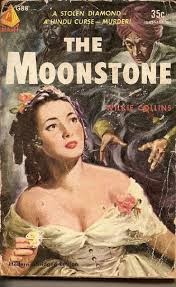
The Moonstone (1868) by Wilkie Collins, published on the London magazine All the Year Round directed by C. Dickens, was seen by the poet and critic T. S. Eliot as the first real detective story in literature. It deals with the theft of a notorious diamond, the Moonstone, occurred during the eighteenth birthday party of Rachel Verinder - the jewel is a gift to Rachel by his uncle, an unscrupulous officer of the British Army in India. 

DOWNLOAD diCARTA ebook FROM HERE


A cover of W. Collin's
The Moonstone 

The diamond has a great religious meaning and is searched by three Hindus who have devoted their lives to recover the it. To solve the intricate case is Sergeant Cuff, a solitary detective in retirement with a passion for roses. Sergent Cuff was one of the first investigators inspired by the real detective involved in the horrible murder of Road Hill House, Mr. Jonathan Whicher.

DOWNLOAD diCARTA ebook FROM HERE


The Moonstone mixes important historical events with mystery. The action takes place in the years 1848-49, at the time of the second Anglo-Sikh War in India, which established British control over that country and marked the beginning of "the empire" of the East India Company. The great diamond refers to two very famous stones: the Russian "Orloff" (the diamond in the Russian Imperial Sceptre) and the "Koh-i-Noor" (the Persian "mountain of light"), both stolen by Europeans. 


Copertina di
La Pietra di Luna
di W Collins 
 
T. S. Eliot definì primo vero romanzo poliziesco della letteratura inglese The Moonstone, La Pietra di Luna (1868) di Wilkie Collins (1824 – 1889) che uscì in Inghilterra nel 1868 a puntate sul periodico di Londra All the Year Round il cui direttore era Charles Dickens. 
Subito dopo una festa di compleanno, un gioiello viene rubato; si tratta di un gioiello molto prezioso la cui sparizione mette a nudo la vita di un uomo onesto e insospettabile, rivela l’ipocrisia di certe regole sociali e l’arroganza della civiltà occidentale che basa i suoi valori sul materiale e il commerciabile.


DOWNLOAD diCARTA ebook FROM HERE


Victorian interior 

La pietra di luna, così importante per i rabbini per la loro religione, diventa simbolo di potere e ricchezza in occidente, dove il suo valore prende un’importanza di tipo puramente economico. Il giallo diventa quindi un modo per avvicinare o contrapporre culture diverse, per sottolineare le disparità sociali ed evidenziare idiosincrasie e manie nascoste. Inoltre il personaggio dell'investigatore chiamato a risolvere si ispira al vero ufficiale di polizia Mr. Jonathan Whicher che si era occupato dell'orribile omicidio di Road Hill House, un uomo schivo e solitario, amante dei fiori.

Sunday, 7 December 2014

Di cosa è fatto diCARTA? oltre le pagine


diCARTA nasce dalla passione per i gialli e per l’occulto, ma anche un campanilistico amore per Torino, Torino barocca, Torino liberty, Torino la misteriosa …


diCARTA è un ebook, ovvero un libro digitale; è il primo libro che pubblichiamo con NOTTEpress ed è una storia che dimostra come, nonostante questa attrazione per la tecnologia, la magia, il mistero, l’inspiegabile esercitano ancora .una forte attrazione. Una trama che collega Torino agli altri poli del triangolo magico; che si sta prendendo forma giorno dopo giorno tra scambi epistolari e voicechat.

Se non hai ancora letto il trailer diCARTA lo trovi di seguito,

SCARICA diCARTA ebook DA QUI

Trailer:
Un incidente stradale, una gamba rotta e un sogno messicano infranto.
La scoperta di parole impolverate e simboli misteriosi,
sogni e realtà per un intrigo di misteri dal passato.

SCARICA diCARTA ebook DA QUI