Showing posts with label road. Show all posts

Thursday, 23 July 2015

Visita - the Templars in Turin


Turin
the hill 

A story connected to the Templars could not  be missing among Turin's legends.  The story of the Templars is closely tied with the history of the eight Crusades (1096-1270) to the Holy Land of Palestine. This order, which united the cross and the sword, was founded in 1118 by eleven French Cavaliers guided by Hugues de Payns. They were called the Religious and Military Order of the Poor Cavaliers of Christ and adopted the monastic rules of Saint Augustine. When Baudouin II, became King of Jerusalem, the Knights settled in the ancient Temple of Solomon, whence their name of Cavaliers of the Temple of Zion (Jerusalem) or Templars. In 1128 the Order was confirmed by the Council of Troyes and then by Pope Innocence II. In Turin the Templars were called by Bishop Carlo (1148 – 52) to protect the pilgrims headed to Rome through the Via Francigena and to defend a bridge on the river Po. A copper spoon and a plate with the order's emblem and a washbasin - King Salomom's symbol (looped square) - have been found on the Capuccini hillside. Besides, a  report states that a friar gardener while working in the orchard, found a skeleton probably belonging to the important dignitary of the order Fra Ogerio in Turin in 1276.


http://www.comune.torino.it/canaleturismo/en/curiosity/templars.htm
http://www.visitatorino.com/fantasmi_a_torino.htm


Go to our Catalogue for Ebooks and Stories


i Templari 


Di mistero in mistero, a Torino non potevano mancare i Templari, uno tra gli ordini più discussi, misteriosi, religiosi ed esoterici allo stesso tempo… Sul Monte dei Cappuccini alcuni reperti ritrovati - un cucchiaio in rame e un piatto con le insegne dell’Ordine, un bacile decorato dal nodo di Salomone - hanno suffragato l'ipotesi della presenza dei rappresentati di quest’ordine dietro l’ antica chiesa medievale di Santa Maria -  a riprova che la collina di Torino dal 1204 al 1314 fu presidio fortificato dei Cavalieri Templari. La loro presenza in città è certificata dal 16 giugno 1156. Erano stati chiamati dal vescovo Carlo (1148-1162) per vegliare e proteggere la Via Francigena, percorsa dai pellegrini diretti a Roma, e difendere un ponte di legno che già allora valicava il Po.  La «Cronaca ufficiale del Monte dal 1928» racconta che un frate giardiniere, mentre zappava l’orto, portò alla luce «uno scheletro intero di un uomo»,  poi disperso nell’ossario civico. Forse si trattava di  «Fra Ogerio» un dignitario di rilievo che  nel 1276 era alla guida della «precettoria» templare di Torino.


Sunday, 12 July 2015

Visita - the Gianduiotto

the gianduiotto 

The Gianduiotto  is a Piedmontese chocolate usually wrapped in a  gold or silver-coloured  tinfoil cover. It takes its name from gianduja, a mask in commedia dell'arte that represents the archetypal Piedmontese. Gianduja's hat inspired the shape of the Gianduiotto. The Gianduiotto is made of paste of sugar, cocoa and hazelnut Tonda Gentile from  Langhe. The original idea was born during Napoleon’s reign: importing cocoa from South America was extremely difficult and expensive, so local producers started incorporating bits of roasted hazelnuts - grown locally, easy and cheap - to make the final product more affordable. The birth of gianduitto instead  dates back to 1865 in Turin, when Paul Caffarel and Michele Prochet, first grinded hazelnuts to a paste before adding them to the cocoa and sugar mix.


http://www.caffarel.com/it/gianduiotto
http://www.eurochocolate.com/it/rubriche/chococult.html?id=257


Go to our Catalogue for Ebooks and Stories


nocciole e cioccolato 


Il  gianduiotto è un cioccolatino  fatto di un impasto di cacao, zucchero e nocciole delle Langhe tritate e di solito incartato con stagnola dorata.  Deve il suo nome a Gianduja, Gian d’la duja o Giovanni del Boccale, caratteristica maschera piemontese, simbolo della lotta per l’indipendenza che si combatté in Piemonte nel 1799. Pare anche che proprio il cappello della maschera abbia ispirato la forma del cioccolatino.
L’idea nacque per necessità: nel 1806, a causa del blocco napoleonico infatti, i cioccolatieri piemontesi non riuscendo a rifornirsi del cacao necessario, ebbero  l’idea di mescolare il cacao con le nocciole locali, più economiche. Nel 1865 i cioccolatieri Caffarel e Prochet lanciarono sul mercato questo rivoluzionario prodotto,   originale per la sua forma a spicchio  e  per il rivestimento: era il primo cioccolatino incartato.
Inizialmente venne chiamato “givù”, parola piemontese per  “bocconcino”, ma l'attuale nome venne dato nel 1866, quando, durante una parata in onore del Carnevale, un attore vestito da Gianduia ebbe l’idea di regalare alla folla i nuovi cioccolatini.


Tuesday, 24 March 2015

Visita- Il sogno verticale

Per la Versione Italiana
Mole Antonelliana 
Mole Antonelliana:  “a vertical dream.”
The Mole Antonelliana, Turin's landmark, is 167.5 meters in height - the tallest structure in all of Europe once. Begun  in 1863 by the architect Alessandro Antonelli from Novara,  the building was originally meant to be a synagogue but the Municipality of Torino bought it in 1878, under construction, and turned it  into a monument to national unity. The building was completed in 1889, not by Antonelli (who died the year before at the age of ninety and worked until his end) but by his son Costanzo.   In 1961, on the occasion of the celebrations for the 100th anniversary of the Unity of Italy, a panoramic lift was installed. Renovated in 1999 the lift  now takes visitors up to the “small temple” and the extraordinary 360° view from its balcony over the city.  There are no intermediate floors between the lift’s departure point at the 10 meter level and its arrival point, 85 meters higher up.

http://blog.turismotorino.org/utilities/ascensore-mole-antonelliana/
http://silvanadicristofano.blogspot.it/2014/07/la-mole-antonelliana-torino.html

Go to our Catalogue for Ebooks and Stories


 Versione Italiana
Mole Antonelliana. sezione
La Mole Antonelliana, simbolo di Torino, è alta 167,5 metri, e un tempo era considerata la più alta struttura in Europa. Iniziata nel 1863 dall'architetto Alessandro Antonelli di Novara, l'edificio originariamente avrebbe dovuto ospitare la sinagoga, ma il comune la comprò non ancora ultimata e la destinò ad essere monumento per l'Unità d'Italia. L'edificio fu completato nel 1889, non da Antonelli (che morì l'anno precedente novantenne e che lavorò fino alla fine) ma dal figlio COstanzo. Mel 1961, in occasione delle celebrazioni per il 100° anniversario dell'unità d'Italia, venne installato un ascensore panoramico. Rinnovato nel 1999 l'ascensore ora porta i visitatori al tempietto da dove possono godere di una vista straordinaria a 360° sulla città. Non ci sono piani intermedi tra il piano terra  a 10 metri di altezza e la cima, 85 metri più in alto.


http://blog.turismotorino.org/utilities/ascensore-mole-antonelliana/
http://silvanadicristofano.blogspot.it/2014/07/la-mole-antonelliana-torino.html

Go to our Catalogue for Ebooks and Stories

Tuesday, 3 March 2015

Visita- Palazzo Madama

Per la Versione Italiana

Palazzo Madama
Where is the beating heart of Turin? It is in the centre of Piazza Castello, where Palazzo Madama stands in the middle of the square. It  is on the site of the antique gateway to the Roman castrum  ( 1st century BC,)  the Porta Decumana. It was a fortress, a castle and finally the official residence of two duchesses from the house of Savoy, regents for their sons. The palace started being named Palazzo Madama  in the 19th century:  in May 1848, the opening session of the Senate of the Kingdom of Sardinia approved the Savoy dynasty's intention to proceed with the unification of Italy. Inside Palazzo Madama today there is  Museo d'Arte Antica (Museum of Antique Art), over  70,000 works  from the medieval period to the Baroque. There are paintings, sculpture, illuminated manuscripts, majolica and porcelain, gold and silverware, furnishings and fabrics and among the masterpieces there are a manuscript written by Van Eyck and Antonello da Messina's Portrait of a Man in the Treasure Tower.
http://www.palazzomadamatorino.it/blog/


Go to our Catalogue for Ebooks and Stories


Versione Italiana
Interno di Palazzo Madama 
Ma il cuore di Torino dove si trova? Nel centro di Piazza Castello, a Palazzo Madama, sull’antica porta verso l’accampamento romano, la Porta Decumana. In passato fu fortezza, castello ed infine residenza di due duchesse della Casa Savoia, reggenti dei loro figli. Il Palazzo fu denominato Madama nel 19° secolo: nel maggio del 1948 la sessione di apertura del senato del Regno di Sardegna approvò l’intenzione della dinastia Savoia di procedere con l’unificazione d’Italia. All’interno di Palazzo Madama ora si trova il Museo di Arte Antica, circa più di 70.000 lavori che vanno dal periodo medioevale all’epoca barocca. Ci sono sculture dipinti, pezzi di argento e oro, manoscritti, ceramiche e porcellane, tessuti e, tra i capolavori, un manoscritto di Van Eyck e il Ritratto di Uomo di Antonello da Messina nella Stanza del Tesoro.
http://www.palazzomadamatorino.it/blog/

Monday, 29 December 2014

atNIGHT- a dangerous diamond

Per la Versione Italiana


The Great Exhibition (1851)


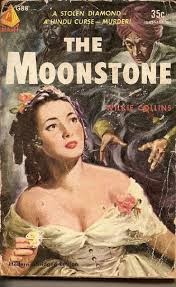
The Moonstone (1868) by Wilkie Collins, published on the London magazine All the Year Round directed by C. Dickens, was seen by the poet and critic T. S. Eliot as the first real detective story in literature. It deals with the theft of a notorious diamond, the Moonstone, occurred during the eighteenth birthday party of Rachel Verinder - the jewel is a gift to Rachel by his uncle, an unscrupulous officer of the British Army in India. 

DOWNLOAD diCARTA ebook FROM HERE


A cover of W. Collin's
The Moonstone 

The diamond has a great religious meaning and is searched by three Hindus who have devoted their lives to recover the it. To solve the intricate case is Sergeant Cuff, a solitary detective in retirement with a passion for roses. Sergent Cuff was one of the first investigators inspired by the real detective involved in the horrible murder of Road Hill House, Mr. Jonathan Whicher.

DOWNLOAD diCARTA ebook FROM HERE


The Moonstone mixes important historical events with mystery. The action takes place in the years 1848-49, at the time of the second Anglo-Sikh War in India, which established British control over that country and marked the beginning of "the empire" of the East India Company. The great diamond refers to two very famous stones: the Russian "Orloff" (the diamond in the Russian Imperial Sceptre) and the "Koh-i-Noor" (the Persian "mountain of light"), both stolen by Europeans. 


Copertina di
La Pietra di Luna
di W Collins 
 
T. S. Eliot definì primo vero romanzo poliziesco della letteratura inglese The Moonstone, La Pietra di Luna (1868) di Wilkie Collins (1824 – 1889) che uscì in Inghilterra nel 1868 a puntate sul periodico di Londra All the Year Round il cui direttore era Charles Dickens. 
Subito dopo una festa di compleanno, un gioiello viene rubato; si tratta di un gioiello molto prezioso la cui sparizione mette a nudo la vita di un uomo onesto e insospettabile, rivela l’ipocrisia di certe regole sociali e l’arroganza della civiltà occidentale che basa i suoi valori sul materiale e il commerciabile.


DOWNLOAD diCARTA ebook FROM HERE


Victorian interior 

La pietra di luna, così importante per i rabbini per la loro religione, diventa simbolo di potere e ricchezza in occidente, dove il suo valore prende un’importanza di tipo puramente economico. Il giallo diventa quindi un modo per avvicinare o contrapporre culture diverse, per sottolineare le disparità sociali ed evidenziare idiosincrasie e manie nascoste. Inoltre il personaggio dell'investigatore chiamato a risolvere si ispira al vero ufficiale di polizia Mr. Jonathan Whicher che si era occupato dell'orribile omicidio di Road Hill House, un uomo schivo e solitario, amante dei fiori.

Saturday, 20 December 2014

laNOTTE- Road House's secrets

Per la Versione Italiana

Road Hill House

An inspiration while writing diCARTA was the story of a terrible murder occurred in England in June 1860.  Three-year-old Saville Kent is found at the bottom of an outdoor privy with his throat cut. England is terrified and everyone tries to solve the mystery. 


Go to our Catalogue for Ebooks and Stories

The cover of the novel


To investigate the crime is called the greatest detective in the country, Inspector Jonathan Whicher. According to him, the guilty party is Constance, the plain, gloomy, teenage half-sister of little Saville Kent. And he is right, but the public opinion uproars in bewilderment and destroys the career of the detective. Five years later the girl confesses her crime, becoming one of the best-known names in England. As to Inspector Jonathan Whicher, heis still living on in fiction, as his figure has been an example for the all-knowing and all-seeing detectives nature loving such as Wilkie Collins’s Sgt. Cuff in The Moonstone, Sir Arthur Conan Doyle’s Sherlock Holmes, Agatha Christie’s Hercule Poirot, Dashiell Hammett’s Sam Spade and Rex Stout’s Nero Wolf.

Go to our Catalogue for Ebooks and Stories

The Suspicions of Mr. Whicher reads like the best of Victorian thrillers; Kate Summerscale has revived the mystery of Road Hill House depicting not only a crime, but the atmosphere of the period, the curiosity and the involvement of the English people, the attraction for what is criminal and macabre and the middle class society beyond the elegant and respectable façade - scheming servants, rebellious children, insanity jealousy, and hatred.  


Versione Italiana

The Murderer
Constance Kent 
Una delle influenze durante la creazione di diCARTA è stato il libro 
Omicidio a Road Hill House. Un delitto avvenuto nell’estate 1860 scuote l’opinione pubblica: Saville Kent, di tre anni, viene rapito e subito dopo trovato con la gola tagliata vicino alla sua abitazione. Tutti gli abitanti della elegante casa di Road Hill House in Wiltshire sono interrogati e dall’inchiesta emergono i particolari di una famiglia in apparenza inattaccabile: figli ribelli, tresche clandestine, solitudine, pazzia, gelosia e servitù intrigante. Il mistero s’infittisce e viene chiamato un detective di Londra, un giovane promettente, Jonathan Whicher, che già si era fatto notare in precedenza per il suo acume. 

Go to our Catalogue for Ebooks and Stories


Book cover

Il libro Omicidio a Road Hill House di Kate Summerscale (2008) mette in luce proprio come questo semplice poliziotto amante della campagna, solitario e timido rimarrà nella memoria collettiva ispirando molti dei famosi detective delle letteratura gialla e del mistero a partire dal sergente Cuff descritto da Wilkie Collins in La Pietra di Luna, all’immortale Sherlock Holmes create da Sir Arthur Conan Doyle e poi Hercule Poirot di Agatha Christie, Nero Wolf di Rex Stout o Sam Spade di Dashiel Hammet. Da questa letteratura nasce la passione per il noir e l'e-book diCarta.  


www.ilmiolibro.kataweb.itwww.women.it