

Showing posts with label mistero. Show all posts
Showing posts with label mistero. Show all posts
Sunday, 22 November 2015

Sunday, 15 November 2015
visita - the executioner and ....
Do
you remember? Piazza Statuto is the heart of black magic in Turin.
Why? Because it stands in the West where the sun sets, because in Roman Times it was a necropolis (vallis occisorum ), because it was the centre of the cloaca, because it was the door to the hell, because it was the place of the gallows and because it was the area where the executioners lived ...and the executioners were wealthy, frightening and influential people once.
Yes, in Via Bonelli, the executioner of Turin lived - and walked around wearing black suits and carrying a bag with his tools. He exhibited a sort of price list: every torture and death had its price! In Via Barbaroux, in the Church Della Misericordia there is still the document with the names of people executed, their black hoods, the little glass (bicchierino) for the last drink and a crucified Christ: here the convict was blessed and then buried.
And there is story about the hangmen ...

Vi ricordate Piazza Statuto? il cuore della magia nera di Torino. Perché? Perché il sole tramonta ad Ovest e la Pizza è a Ovest, perché era stata la necropoli ed era stato il posto della claoca ai tempi dei Romani, perché era la porta dell'inferno, perché un tempo c'era la forca e perché nei pressi abitavano i boia di Torino...e i boia erano ricchi, influenti e temuti.
Già, in Via Bonelli viveva il boia di Torino - vestito di nero, si dice che girasse con una borsa dei "ferri del mestiere" e un listino prezzi per ogni differente tipo di uccisione. Nella chiesa della Misericordia, in via Barbaroux,ci sono ancora il registro dei condannati, i cappucci neri,il "bicchierino"dell'ultimo sorso e il crocifisso ed è qui che venivano benedetti e sepolti i giustiziati.
Why? Because it stands in the West where the sun sets, because in Roman Times it was a necropolis (vallis occisorum ), because it was the centre of the cloaca, because it was the door to the hell, because it was the place of the gallows and because it was the area where the executioners lived ...and the executioners were wealthy, frightening and influential people once.
Yes, in Via Bonelli, the executioner of Turin lived - and walked around wearing black suits and carrying a bag with his tools. He exhibited a sort of price list: every torture and death had its price! In Via Barbaroux, in the Church Della Misericordia there is still the document with the names of people executed, their black hoods, the little glass (bicchierino) for the last drink and a crucified Christ: here the convict was blessed and then buried.
And there is story about the hangmen ...
Già, in Via Bonelli viveva il boia di Torino - vestito di nero, si dice che girasse con una borsa dei "ferri del mestiere" e un listino prezzi per ogni differente tipo di uccisione. Nella chiesa della Misericordia, in via Barbaroux,ci sono ancora il registro dei condannati, i cappucci neri,il "bicchierino"dell'ultimo sorso e il crocifisso ed è qui che venivano benedetti e sepolti i giustiziati.
E c'è una storia che riguarda i boia....
Wednesday, 9 September 2015
visita - Torino è casa mia

Only who was born in Turin can say Turin is my house. In this book Giuseppe Culicchia presents his mysterious city to some friends. He introduces Turin as he should introduce someone into his own home, a place with memories and stories. Room after room – starting from the station of Porta Nuova, the entrance - he reveals the past, the people and the events of Turin, a place very special and almost unknown to most people.
http://www.letteratura.rai.it/articoli/giuseppe-culicchia-torino-%C3%A8-casa-mia/16282/default.aspx
Go to our Catalogue for Ebooks and Stories

Solo chi è nato a Torino può dire Torino è casa mia. In questo libro Giuseppe Culicchia presenta la sua misteriosa città come se facesse entrare nella sua casa un gruppo di amici. Un luogo fatto di storie e di ricordi. Stanza dopo stanza – partendo dalla stazione di Porta Nuova, l’ingresso - racconta storie, eventi e personaggi di Torino, un luogo molto speciale ma sconosciuto ai più.
http://www.letteratura.rai.it/articoli/giuseppe-culicchia-torino-%C3%A8-casa-mia/16282/default.aspx
Go to our Catalogue for Ebooks and Stories
Thursday, 30 July 2015
Visita - Cesare Pavese
.jpeg) |
| Cesare Pavese |
Go to our Catalogue for Ebooks and Stories
.jpeg) |
| Cesare Pavese |
Go to our Catalogue for Ebooks and Stories
Sunday, 19 July 2015
visita - the grolla

The grolla, also called 'cup of friendship', is a typical object of the Aosta Valley handicraft and it is used to share warm drinks with friends - usually coffee spiked with grappa. It is a covered wooden cup, often carved, with several spouts which are used to drink "à la ronde" that is passing the cup from hand to hand, never putting it down until it is empty. It was initially used as a daily wooden bowl.
The word “grolla” is related etymologically to “grail,” and is believed to have been inspired by the Holy Grail itself.
http://www.yndella.com/it-it/grolla-valdostana-coppa-dellamicizia_c2.aspx
http://www.agrodolce.it/2013/11/08/grolla-o-coppa-dellamicizia/
Go to our Catalogue for Ebooks and Stories

La grolla, o Coppa dell'Amicizia, è un oggetto tipico dell'artigianato valdostano ed è usato per condividere con amici bevande calde - solitamente caffè con grappa. E' un tazzone coperto, di legno, spesso istoriato, con parecchi beccucci da cui appunto si beve passando la coppa di mano in mano finchè non è finita. Inizialmente era una coppa usata quotidianamente. Il suo nome deriva probabilemnte da Grail e si riferisce al Sacro Graal
Wednesday, 15 July 2015
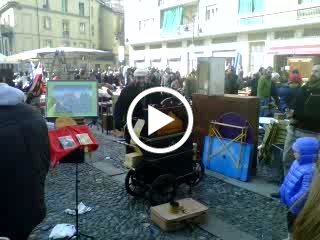
visita: the flea market
Go to our Catalogue for Ebooks and Stories
Una domenica mattina al Balon, Torino
Go to our Catalogue for Ebooks and Stories
Sunday, 5 July 2015
visita: San Lorenzo
 |
| San Lorenzo - the dome |
San Lorenzo was the first church which hosted the Sacra Sindone (Holy Shroud) in Turin when Duke Emanuele Filiberto took it from Chambery in 1578. San Lorenzo was built by abbot Guarino Guarini and then restored by Emanuele Filiberto who named it San Lorenzo because of a vow made during a battle won in Fiandre on the 10th August. The church is in Piazza Castello near Palazzo Madama and Palazzo Real. Inside there are numerous precious works of art and interesting stimuli for people who love mystery. The architect seems to have hidden messages in the forms, in the colours and in the numbers which decorate the building, symbols that accompany men to reach the Absolute. Angels look at the visitor together with menacing and devilish faces as to show that good can't exist without evil as light can't exist without darkness. On the spring and Autumn equinoxes a ray enters from the dome and strikes the porthole of the first chapel near the altar showing a fresco of God which otherwise would be invisible in the darkness.
http://eng.sanlorenzo.torino.it/
http://www.visitatorino.com/en/church_of_san_lorenzo.htm
Go to our Catalogue for Ebooks and Stories
 |
| San Lorenzo - esterno |
La Real Chiesa di S.Lorenzo a Torino fu la prima chiesa che ospitò la Sindone quando il duca Emanuele Filiberto di Savoia la fece portare nel 1578 dal castello di Chambery, dove si trovava dal 1453. La chiesa fu costruita dall'abate teatino Guarino Guarini, e fu poi restaurata grazie all'interesse del duca Emanuele Filiberto che la intitolò a San Lorenzo, per un voto fatto nelle Fiandre durante una battaglia vinta il 10 agosto 1557. Situata in Piazza Castello, vicino a Palazzo Reale e a Palazzo Madama la chiesa è chiusa tra edifici e non dà l'idea di essere un luogo di culto, ma all'interno offre opere d'arte di un certo pregio e stimoli interessanti, per gli amanti del mistero. Il progettista sembra che abbia volutamente creato un complesso insieme di contrasti apparenti, di messaggi insiti nelle forme, nei colori, nei numeri, per un percorso verso 'Assoluto : centinaia di figure angeliche (oltre 400) guardano da affreschi e sculture, mentre sulla cupola ci sono volti minacciosi e diabolici. Forse l'architetto volle indicare che non c'è luce senza tenebra, non c' è bene senza male. Inoltre durante il giorno dell'Equinozio di Primavera e d'Autunno, avviene un fenomeno sorprendente: il raggio che entra a mezzogiorno dalla cupola va a colpire l'oblò della prima cappella accanto all'altare e illumina un affresco di Dio Padre che altrimenti sarebbe completamente buio e invisibile!
http://www.tripadvisor.it/Attraction_Review-g187855-d595928-Reviews-Real_Chiesa_di_San_Lorenzo-Turin_Province_of_Turin_Piedmont.html
Go to our Catalogue for Ebooks and Stories
Sunday, 28 June 2015
visita: Nietzsche in Turin

In Turin, at 6, Via Carlo Alberto, on the corner of the square, Friederich Nietzsche lived for a brief period, from 5th April to 5 June 1888 and the first months of the following year. It was in Turin that the German philosppher wrote Ecce homo. He loved the city and descibed it as severe and elegant. The philosopher wrote to his friend Peter Gast that he could work, eat and sleep in Turin ...the air gave him energy. Unfortunately it was just in the piedmontese capital that Nietzsche showed the first signs of his insanity: when he saw a coachman beating his horse, he insulted him and embraced and kissed the animal. While taken home Nietzsche cried and shouted he was God; afterwards his friend Overbeckper accompanied him to Basilea to be cured.

In via Carlo Alberto numero 6, all'angolo con l'omonima piazza, abitò per un breve periodo - dal 5 aprile al 5 giugno 1888 e per i primi mesi dell'anno successivo - Friedrich Wilhelm Nietzsche e qui il filosofo scrisse il libro della sua vita, Ecce homo. Nietzsche era letteralmente innamorato dell'atmosfera torinese, dignitosa, severa , elegante. In una lettera all'amico Peter Gast si legge che qui si sentiva di buon umore “Mangio come un dio, riesco a dormire nonostante il rumore delle carrozze che passano di notte.” Purtroppo sempre a Torino si mostrarono i primi segni della sua follia. Il 3 gennaio del 1889, nel centro di Torino, Nietzsche, uscendo di casa, vide un cocchiere frustare a prendere a calci il suo cavallo. "Tu, disumano massacratore di questo destriero!", inveì il filosofo furibondo abbracciando e baciando sconvolto il cavallo. Fu accompagnato a casa e quindi portato via dalla città dall'amico Overbeck per essere curato a Basilea.
Go to our Catalogue for Ebooks and Stories
Wednesday, 24 June 2015
visita: La Tesoriera
 |
| La Tesoriera |
La Tesoriera hides some mysteries and once was called The Garden of the Devil: a ghost wearing a black cloak with red hedge wanders in the nearby country at night and a young woman has been seen walking through the ancient, elegant halls of the palace for 20 years.
Go to our Catalogue for Ebooks and Stories
 |
| La Tesoriera |
La Tesoriera nasconde dei segreti ed è stata associata alla figura del diavolo, tanto che il parco della villa fu chiamato I Giardin del Diav: il fantasma di un cavaliere solitario in un mantello nero bordato di rosso esce dalla villa nella notte e vaga per la campagna circostante, e una giovane ragazza si aggira per le antiche sale.
Go to our Catalogue for Ebooks and Stories
Sunday, 21 June 2015
Visita - Don Bosco
 |
| Don Bosco and the children |
Giovanni Melchior Bosco was born in 1815, in a small village outside Turin. He was a lively child and loved entertaining people: he learned to walk the tightrope, and do conjuring tricks like pull coins from the ears of startled onlookers. By the time he was 10, he was preaching, mixing prayers with magic: he tied 3 ropes together and made one seamless rope – it illustrated the concept of the Trinity.
Don Bosco (or Father Bosco) was later ordained in Turin: he was so shocked by the great number of the city’s street children that he devoted his life to helping them. He set up schools, dormitories and workshops and eventually established the Salesian Society, a branch of the Catholic church. Don Bosco was canonised in 1934 and became Saint Giovanni Bosco. He is buried inside the church devoted to Santa Maria Ausiliatrice.
 |
| Don Bosco e i bambini |
Giovanni Melchiorre Bosco nacque nel 1815 in un piccolo paese fuori Torino. Era un ragazzino vivace che amava intrattenere le persone - camminava sulla corda e faceva giochi di prestigio come tirare fuori le monete dalle orecchie di che lo guardava stupito. A 10 anni già predicava mescolando le preghiere con i suoi trucchi: legava tre corde insieme per farne una sola simile illustrando così il concetto di Trinità. Padre Don Bosco divenne prete a Torino. La sua preoccupazione maggiore fu di dare una casa a tutti i ragazzi di strada che popolavano la città e dedicò a questo la sua vita: fece costruire scuole, dormitori e laboratori...infine fondò la società Salesiana, un ramo della Chiesa Cattolica. Fu canonizzato Santo nel 1934 ed è ora sepolto all' interno della Chiesa Santa Maria Ausiliatrice.
Wednesday, 17 June 2015
visita: Kha and Merit's tomb (Egyptian Museum)
.jpeg)
Merit and Kha were buried with the objects they loved when alive and necessary in their afterlife. Unguents and kohl were essential for cleanliness and were preserved in vases with a cover made of alabaster, glass and ceramic. Kohl was used as a protection against sun and flies: they spread it under the eyes as a make up. It was kept in a palm shaped vase as the palms were symbols of life. The glass was very precious as it was quite new. All these little vessels were put inside a two level box with five compartments. The box is decorated with a chess pattern and a lotus gem – the lotus means rebirth as it is a flower which closes at night and disappears in the water to re – emerge the following day. The sentence written on the box says that it is an offer to Merit's spirit.
http://collezioni.museoegizio.it/eMuseumPlus?service=ExternalInterface&module=collection&objectId=102290&viewType=detailView
https://www.facebook.com/media/set/?set=a.405210236199413.101049.178778378842601&type=3
Go to our Catalogue for Ebooks and Stories
Al Museo Egizio.La tomba di Kha e di Merit era corredata di tutti gli oggetti da loro usati in vita, necessari nell’Aldilà. Gli unguenti e il kohl erano considerati elementi essenziali per l’igiene e venivano conservati in una varietà di recipienti con coperchio in alabastro, vetro e ceramica. Gli Egizi si proteggevano dal sole e dalle mosche spalmandosi sotto gli occhi del kohl scuro. Il tipico recipiente per il kohl era a forma di palma, simbolo della vita. Il vetro era un materiale relativamente nuovo e perciò considerato prezioso. Tutti questi recipienti di forme diverse, furono sistemati con cura in questa cassetta di legno a due livelli, dotata sul fondo di cinque scompartimenti. Il cofanetto è decorato con un motivo a scacchiera e con una gemma di loto e una bordura di questi fiori (il loto simboleggia la rinascita perché di notte si chiude e va a fondo, per rifiorire però all’alba). L’iscrizione, forse aggiunta poco prima della sepoltura, riporta che il cofanetto è un’offerta funeraria per lo spirito di Merit.
Go to our Catalogue for Ebooks and Stories
Sunday, 7 June 2015
visita: Mickey mouse in Turin

The story was written by Gianfranco Goria and designed by Giampiero Ubezio for the 7th February 1993 issue – when the little magazine still cost 2.300 liras.
Go to our Catalogue for Ebooks and Stories
 Topolino visitò Torino più volte, una per celebrare i 150 anni dell'unità d'Italia, ma la storia più famosa è quella ambientata al Museo Egizio. L'avventura si apre su un aereo in volo verso Torino. A bordo il professor Zapotec, direttore del museo di Topolinia, accompagnato da Pippo, Topolino e Minni. Il gruppo deve portare alcuni importanti reperti al Museo Egizio, ma arrivati a torino i nostri amicic fanno i turisti, e pregustani i gianduiotti e la pasticceria torinese. La sera prima dell'inaugurazione, però, la statuetta viene rubata. Qui comincia il giallo che porterà alla scoperta del ladro. La storia fu scritta da Gianfranco Goria e disegnata da Giampiero Ubezio per il numero del 7 febbraio 1993, quando il giornalino costava ancora 2.300 lire.
 Go to our Catalogue for Ebooks and Stories
Sunday, 31 May 2015
visita: Torino sotterranea
 Writer Gianni Toninelli tells about his explorations: under a farm in Grugliasco he has found a gallery seven metres large and four height with torches on the wall; under an old store in the Murazzi area there was a gallery which ran all Via Po to Piazza Castello and another one led from Palazzo Madama to the Military Quarters of Juvarra. Every palace related to the political or the military power was once connected with an under surface gallery.
All
the churches in Turin are connected among them by means of
galleries...and there were also the chambers of tortures of the Saint
Inquisition hidden in the secret rooms of the tunnels..
These
secret galleries were also useful during the curfews in war periods
and during the epidemic they were useful ways to avoid being
contaminated. Some legends also reveal that the Greek Philosopher
Apollonio di Tiana hid in one of these tunnels the Philosopher stone.
Now
most of the galleries are close for security measures .
http://rottasutorino.blogspot.it/2014/05/le-gallerie-sotterranee-di-torino-cosi.html
https://revelationsproject.wordpress.com/2013/02/12/gli-infiniti-segreti-della-torino-sotterranea/
Go to our Catalogue for Ebooks and Stories
 Gallerie sotterranee, una città sotto la città. Sotto Palazzo Madama gli alchimisti, ma anche gli aristocratici sicuramente usavano i tunnel per andare da un palazzo all’altro per i loror incontri amorosi e diplomatici, anche nei palazzi fuori le mura: la galleria reale che congiunge Torino a Rivoli è grande tanto da poter essere percorsa da una carrozza.
 Lo scrittore Gianni Toninelli racconta le sue 'esplorazioni': sotto una cascina di grugliasco, negli anni 1950 trovò in una galleria ampia 7 metri, coperta con una volta a botte e alta 4 metri nel punto più alto; ogni 25 metri aveva i supporti per le torce sulle pareti; sotto un vecchio deposito dei Murazzi entrò in una galleria che, percorreva tutta via Po fino a piazza Castello, nei sotterranei di Palazzo Madama e da qui un’altra verso sud, che arriva ai Quartieri Militari di Juvarra.
Tutti i palazzi del potere torinese, dal sovrano agli enti come Affari Interni, Segreteria dello Stato degli Affari Esteri, Accademia Militare, e Cittadella, erano collegati da gallerie.
Anche
tutte le chiese del centro sono collegate
da gallerie dove si potevano anche trovare
le sale della di tortura del
Tribunale dell'Inquisizione. Nei
periodi di guerra le
gallerie servivano durante il coprifuoco e
durante
le epidemie, assicuravano una via di fuga per evitare possibili
contagi.
Leggende
dicono che Apollonio di Tiana, un filosofo greco antico, esperto
conoscitore dell’arte occulta dei talismani, abbia nascosto proprio
all’interno di queste Grotte, la Pietra Filosofale. La maggior
parte delle gallerie oggi è stata chiusa per evidenti ragioni di
sicurezza.
Go to our Catalogue for Ebooks and Stories
Saturday, 2 May 2015
visita: il Balon
The flea Market in Turin, on a Sunday
Il mercato delle Pulci a Torino, una Domenica
Tuesday, 7 April 2015
Visita- Orientalism in Turin
 |
| Bazar in Konstantinople |
http://foglidarte.blogspot.it/2014/06/alberto-pasini-un-pittore-ottocentesco.html
Go to our Catalogue for Ebooks and Stories
Versione Italiana
 |
| Interior of a Mosque in Cordova |
La curiosità verso terre lontane non spinse solo archeologi e collezionisti a viaggiare in oriente, ma anche artisti. Un esempio è il pittore parmense Alberto Pasini (Busseto 3 settembre 1826 – Cavoretto , 15 dicembre 1899) che, dopo aver frequentato alcune scuole d'arte e avere soggiornato a Torino per studi, fu affascinato dal movimento Orientalista – nato nel 19° secolo in seguito alla spedizione di Napoleone in Egitto e all'espansione coloniale europea. Pasini intraprese un viaggio al seguito di una spedizione diplomatica francese verso Egitto, Turchia, Persia e Arabia nel 1855. Durante questo periodo eseguì circa sessanta disegni e molti schizzi che diventarono poi pitture quando ritornò in Europa, in Francia e poi in Italia.
http://foglidarte.blogspot.it/2014/06/alberto-pasini-un-pittore-ottocentesco.html
http://foglidarte.blogspot.it/2014/06/alberto-pasini-un-pittore-ottocentesco.html
Saturday, 21 March 2015
Visita - Erasmo da Rotterdam in Torino
 |
| Erasmo da Rotterdam |
From 1506 to 1509 Erasmo da Rotterdam, was in Italy: in 1506 he graduated as Doctor of Divinity at the Turin University. He took the degree in Divinity because Psychology did not yet exist, but both subjects are related to the search into the soul.Desiderius Erasmus Roterodamus was born on 27 October 1466 and died on 12 July 1536. He was a Dutch Renaissance humanist, Catholic priest, social critic, teacher, and theologian. Orphaned at an early age, he travelled a lot before coming to Turin. For this reason the project Erasmus is an acronym inspired to his name - European Region Action Scheme for the Mobility of University Students – to stress the importance of knowing other culture different from the native one.
Go to our Catalogue for Ebooks and Stories
 |
| Targa a Torino |
Anche Erasmo da Rotterdam venne a Torino, città, dove si laureò il 4 settembre del 1506. Testimone di questo storico evento è una targa. Si laureò in teologia quando ancora una facoltà di psicologia non esisteva, ma sia la teologia sia la psicologia condividono quella che vien definita “ricerca attorno all’anima”. E’ noto che il grande pensatore, nato a Rotterdam, rimasto orfano in giovane età, viaggiò moltissimo e prima di arrivare a Torino trascorse del tempo a Parigi per arricchire la propria cultura. Dunque, il progetto universitario Erasmus prende il nome proprio da Lui, è un acronimo - European Region Action Scheme for the Mobility of University Students - per affermare quanto sia importate oggi, come allora, affacciarsi a culture diverse dalla propria.
http://www.mole24.it/2014/09/04/erasmo-rotterdam-torino-per-laurearsi/
Go to our Catalogue for Ebooks and Stories
Tuesday, 10 March 2015
Visita- La Madama del Palazzo
Per la Versione Italiana
Who is the lady to whom Palazzo Madama in Turin is entitled’ She is Maria Giovanna Battista. Born in Paris, she moves to Turin at 21 years old , in 1665, following her husband the Duke Carlo Emanuele II from Savoia. In 1675 her husband dies leaving her with a nine year-old boy. She becomes the Ruling Queen and takes particular care to the development of cultural activities. When her son comes of age, she moves from Palazzo Reale to the Palace now named after her Palazzo Madama and asks architect Juvarra to build the marvellous staircase (1714).
http://www.palazzomadamatorino.it/news.php?id_news=355
Versione Italiana
Chi è la madama a cui il Palazzo al centro di Torino è intitolata?
Si tratta di Maria Giovanna Battista, nata a Parigi, ma trasferitasi a Torino nel 1665, a ventun’anni, in seguito al matrimonio con il duca Carlo Emanuele II di Savoia. Nel 1675, rimane vedova con un figlio, Vittorio Amedeo II, di soli nove anni. Deve quindi assumere la reggenza dello Stato, e lo fa ponendo particolare attenzione allo sviluppo della cultura durante tutto il periodo del suo governo. Al compimento della maggiore età del figlio e al passaggio del potere nelle sue mani, la duchessa trasferisce la propria residenza e la sua corte nel castello di Torino, avviando gli ammodernamenti del piano nobile e poi, nel 1714, affidando a Filippo Juvarra la realizzazione della grandiosa nuova scala.
 |
| Maria Giovanna Battista |
http://www.palazzomadamatorino.it/news.php?id_news=355
Go to our Catalogue for Ebooks and Stories
Versione Italiana
|
| Maria Giovanna Battista |
Si tratta di Maria Giovanna Battista, nata a Parigi, ma trasferitasi a Torino nel 1665, a ventun’anni, in seguito al matrimonio con il duca Carlo Emanuele II di Savoia. Nel 1675, rimane vedova con un figlio, Vittorio Amedeo II, di soli nove anni. Deve quindi assumere la reggenza dello Stato, e lo fa ponendo particolare attenzione allo sviluppo della cultura durante tutto il periodo del suo governo. Al compimento della maggiore età del figlio e al passaggio del potere nelle sue mani, la duchessa trasferisce la propria residenza e la sua corte nel castello di Torino, avviando gli ammodernamenti del piano nobile e poi, nel 1714, affidando a Filippo Juvarra la realizzazione della grandiosa nuova scala.
Tuesday, 3 March 2015
Visita- Palazzo Madama
Per la Versione Italiana
Where is the beating heart of Turin? It is in the centre of Piazza Castello, where Palazzo Madama stands in the middle of the square. It is on the site of the antique gateway to the Roman castrum ( 1st century BC,) the Porta Decumana. It was a fortress, a castle and finally the official residence of two duchesses from the house of Savoy, regents for their sons. The palace started being named Palazzo Madama in the 19th century: in May 1848, the opening session of the Senate of the Kingdom of Sardinia approved the Savoy dynasty's intention to proceed with the unification of Italy. Inside Palazzo Madama today there is Museo d'Arte Antica (Museum of Antique Art), over 70,000 works from the medieval period to the Baroque. There are paintings, sculpture, illuminated manuscripts, majolica and porcelain, gold and silverware, furnishings and fabrics and among the masterpieces there are a manuscript written by Van Eyck and Antonello da Messina's Portrait of a Man in the Treasure Tower.
Versione Italiana
Ma il cuore di Torino dove si trova? Nel centro di Piazza Castello, a Palazzo Madama, sull’antica porta verso l’accampamento romano, la Porta Decumana. In passato fu fortezza, castello ed infine residenza di due duchesse della Casa Savoia, reggenti dei loro figli. Il Palazzo fu denominato Madama nel 19° secolo: nel maggio del 1948 la sessione di apertura del senato del Regno di Sardegna approvò l’intenzione della dinastia Savoia di procedere con l’unificazione d’Italia. All’interno di Palazzo Madama ora si trova il Museo di Arte Antica, circa più di 70.000 lavori che vanno dal periodo medioevale all’epoca barocca. Ci sono sculture dipinti, pezzi di argento e oro, manoscritti, ceramiche e porcellane, tessuti e, tra i capolavori, un manoscritto di Van Eyck e il Ritratto di Uomo di Antonello da Messina nella Stanza del Tesoro.
http://www.palazzomadamatorino.it/blog/
 |
| Palazzo Madama |
http://www.palazzomadamatorino.it/blog/
Go to our Catalogue for Ebooks and Stories
Versione Italiana
.jpeg) |
| Interno di Palazzo Madama |
http://www.palazzomadamatorino.it/blog/
Monday, 16 February 2015
Visita- faith and religion
Per la Versione Italiana
 |
| Gran Madre |
http://italiainsolita.blogspot.it/2014/12/i-segreti-della-gran-madre-di-torino.html
http://www.duepassinelmistero.com/Gran%20Madre.htm
Go to our Catalogue for Ebooks and Stories
Versione Italiana
.jpeg) |
| Faith and the Calice |
http://italiainsolita.blogspot.it/2014/12/i-segreti-della-gran-madre-di-torino.html
http://www.duepassinelmistero.com/Gran%20Madre.htm
Go to our Catalogue for Ebooks and Stories
Wednesday, 11 February 2015
Visita- Il Santo Graal
Per la Versione Italiana

The Saint Grail
land the Knights of the Round Table
Turin is also the city of White Magic: it is the place where there is the Holy Sindone, the shroud which wrapped Christ's body in his sepulchre. It is said that Christ's relics are all together. If this is true, in Turin there is also the Saint Grail, the cup in which Christ drank during his last supper and Giovanni D’Arimatea collected his holy blood after Christ’s deposition.
|
| The Saint Grail land the Knights of the Round Table |
Turin is also the city of White Magic: it is the place where there is the Holy Sindone, the shroud which wrapped Christ's body in his sepulchre. It is said that Christ's relics are all together. If this is true, in Turin there is also the Saint Grail, the cup in which Christ drank during his last supper and Giovanni D’Arimatea collected his holy blood after Christ’s deposition.
Go to our Catalogue for Ebooks and Stories
Two statues would testify this theory, the ones which stand on both sides of the steps of the Gran Madre, the large church built on the river Po's banks. The one on the right represents Religion and the other on the left Faith. Faith is holding a chalice which some believe to be a reference to the Holy Grail,. According to some stories the Grail could be buried nearby, some others maintain that the statue itself is looking at the place where the cup is hidden – but the eyes of Faith have no pupils.
https://www.google.com/maps/d/u/0/viewer?oe=UTF8&ie=UTF8&msa=0&mid=z-hVrj1D2sy4.khpGpHzBedA0
Go to our Catalogue for Ebooks and Stories
Two statues would testify this theory, the ones which stand on both sides of the steps of the Gran Madre, the large church built on the river Po's banks. The one on the right represents Religion and the other on the left Faith. Faith is holding a chalice which some believe to be a reference to the Holy Grail,. According to some stories the Grail could be buried nearby, some others maintain that the statue itself is looking at the place where the cup is hidden – but the eyes of Faith have no pupils.
Go to our Catalogue for Ebooks and Stories
.jpeg) |
| Christ during his last supper |
Torino è sì la città della magia nera, ma anche di quella bianca, la città dove c’è la sacra sindone. Secondo la tradizione esoterica, chi possiede una delle reliquie di Cristo le possiede tutte. La presenza della Sindone a Torino, quindi, garantirebbe alla città la presenza degli altri simboli della cristianità. Di qui la convinzione che a Torino si conservi anche il sacro Graal.
Go to our Catalogue for Ebooks and Stories
La leggenda vuole che dopo il suo ritrovamento, i primi uomini lo lavorarono fino a farlo diventare un gradale, un calice, il Santo Graal, appunto, usato poi da Giuseppe D’Arimatea per custodire il sangue di Cristo dopo la crocifissione. Due statue a Torino, sarebbero la prova di questa esistenza. Una è la Fede, davanti alla Gran Madre, sulla sinistra, che impugna un calice con la mano destra e lo alza al cielo.
Go to our Catalogue for Ebooks and Stories
L’altra sarebbe proprio in direzione dello sguardo di Fede, a Palazzo di Città, ove vi sono cesellati nel muro disegni raffiguranti altri calici. Secondo la giornalista storica Giuditta Dembech, autrice di “Torino città magica”, queste interpretazioni del mito del Graal non sono corrrette in quanto il calice non è un qualcosa di materiale, ma sarebbe la rappresentazione della conoscenza perduta dopo il peccato originario nel giardino dell’Eden.
www.torinocuriosa.it/curiosita.php?cdcur=22
Subscribe to:
Posts (Atom)