Showing posts with label magia. Show all posts

Thursday, 23 July 2015

Visita - the Templars in Turin


Turin
the hill 

A story connected to the Templars could not  be missing among Turin's legends.  The story of the Templars is closely tied with the history of the eight Crusades (1096-1270) to the Holy Land of Palestine. This order, which united the cross and the sword, was founded in 1118 by eleven French Cavaliers guided by Hugues de Payns. They were called the Religious and Military Order of the Poor Cavaliers of Christ and adopted the monastic rules of Saint Augustine. When Baudouin II, became King of Jerusalem, the Knights settled in the ancient Temple of Solomon, whence their name of Cavaliers of the Temple of Zion (Jerusalem) or Templars. In 1128 the Order was confirmed by the Council of Troyes and then by Pope Innocence II. In Turin the Templars were called by Bishop Carlo (1148 – 52) to protect the pilgrims headed to Rome through the Via Francigena and to defend a bridge on the river Po. A copper spoon and a plate with the order's emblem and a washbasin - King Salomom's symbol (looped square) - have been found on the Capuccini hillside. Besides, a  report states that a friar gardener while working in the orchard, found a skeleton probably belonging to the important dignitary of the order Fra Ogerio in Turin in 1276.


http://www.comune.torino.it/canaleturismo/en/curiosity/templars.htm
http://www.visitatorino.com/fantasmi_a_torino.htm


Go to our Catalogue for Ebooks and Stories


i Templari 


Di mistero in mistero, a Torino non potevano mancare i Templari, uno tra gli ordini più discussi, misteriosi, religiosi ed esoterici allo stesso tempo… Sul Monte dei Cappuccini alcuni reperti ritrovati - un cucchiaio in rame e un piatto con le insegne dell’Ordine, un bacile decorato dal nodo di Salomone - hanno suffragato l'ipotesi della presenza dei rappresentati di quest’ordine dietro l’ antica chiesa medievale di Santa Maria -  a riprova che la collina di Torino dal 1204 al 1314 fu presidio fortificato dei Cavalieri Templari. La loro presenza in città è certificata dal 16 giugno 1156. Erano stati chiamati dal vescovo Carlo (1148-1162) per vegliare e proteggere la Via Francigena, percorsa dai pellegrini diretti a Roma, e difendere un ponte di legno che già allora valicava il Po.  La «Cronaca ufficiale del Monte dal 1928» racconta che un frate giardiniere, mentre zappava l’orto, portò alla luce «uno scheletro intero di un uomo»,  poi disperso nell’ossario civico. Forse si trattava di  «Fra Ogerio» un dignitario di rilievo che  nel 1276 era alla guida della «precettoria» templare di Torino.


Sunday, 5 July 2015

visita: San Lorenzo

San Lorenzo - the dome 

San Lorenzo was the first church which hosted the Sacra Sindone (Holy Shroud)  in Turin when Duke Emanuele Filiberto took it from Chambery  in 1578.  San Lorenzo was built by abbot Guarino Guarini and then restored by Emanuele Filiberto who named it San Lorenzo because of a vow made during a battle won in Fiandre on the 10th August. The church is in Piazza Castello near Palazzo Madama and Palazzo Real. Inside there are numerous precious works of art and interesting stimuli for people who love mystery. The architect seems to have hidden  messages  in the forms, in the colours and in the numbers which decorate the building, symbols that accompany men to reach the Absolute. Angels look at the visitor together with menacing and devilish faces as to show that good can't exist without evil as light can't exist without darkness. On the spring and Autumn equinoxes a ray enters  from the dome and strikes the porthole of the first chapel near the altar showing  a fresco of God which otherwise would be invisible in the darkness.

http://eng.sanlorenzo.torino.it/
http://www.visitatorino.com/en/church_of_san_lorenzo.htm

Go to our Catalogue for Ebooks and Stories


San Lorenzo - esterno 

La Real Chiesa di S.Lorenzo a Torino fu la  prima chiesa che ospitò la Sindone quando  il duca Emanuele Filiberto di Savoia la fece portare nel 1578 dal castello di Chambery, dove si trovava dal 1453. La chiesa fu costruita  dall'abate teatino Guarino Guarini, e  fu poi restaurata grazie all'interesse del duca Emanuele Filiberto che la intitolò  a San Lorenzo, per un  voto  fatto nelle Fiandre durante una battaglia vinta il 10 agosto 1557. Situata in Piazza Castello, vicino a Palazzo Reale e a Palazzo Madama la chiesa è chiusa tra edifici  e non dà l'idea di essere un luogo di culto, ma all'interno offre opere d'arte di un certo pregio e stimoli interessanti, per gli amanti del mistero. Il progettista sembra che abbia volutamente creato  un complesso insieme di contrasti apparenti, di messaggi insiti nelle forme, nei colori, nei numeri, per un percorso verso 'Assoluto :  centinaia di figure angeliche (oltre 400) guardano da affreschi e  sculture, mentre sulla cupola ci sono volti minacciosi e diabolici.  Forse l'architetto volle   indicare che non c'è luce senza tenebra, non c' è bene senza male. Inoltre durante  il giorno dell'Equinozio di Primavera e d'Autunno, avviene un fenomeno sorprendente:  il raggio che entra a mezzogiorno dalla cupola va a colpire l'oblò della prima cappella accanto all'altare e  illumina un affresco di Dio Padre che altrimenti sarebbe completamente buio e invisibile!

http://www.tripadvisor.it/Attraction_Review-g187855-d595928-Reviews-Real_Chiesa_di_San_Lorenzo-Turin_Province_of_Turin_Piedmont.html

Go to our Catalogue for Ebooks and Stories


Sunday, 28 June 2015

visita: Nietzsche in Turin

In Turin, at 6, Via Carlo Alberto, on the corner of the square,  Friederich Nietzsche lived for a brief period, from 5th April to 5 June 1888 and the first months of the following year. It was in Turin that  the German philosppher wrote Ecce homo. He loved the city and  descibed it as  severe and elegant. The philosopher  wrote to his friend Peter Gast that he could work, eat and sleep in Turin ...the air gave him energy. Unfortunately it was just in the piedmontese capital  that Nietzsche showed the first signs of his insanity: when he saw a coachman beating his horse, he insulted him and embraced and kissed the animal. While  taken home Nietzsche cried and shouted he was God; afterwards his friend Overbeckper accompanied him to Basilea to be cured.


In via Carlo Alberto numero 6, all'angolo con l'omonima piazza, abitò per un breve periodo - dal 5 aprile al 5 giugno 1888 e per i primi mesi dell'anno successivo  - Friedrich Wilhelm Nietzsche e qui il filosofo scrisse il libro della sua vita, Ecce homo. Nietzsche era letteralmente innamorato dell'atmosfera torinese, dignitosa, severa , elegante. In una lettera all'amico Peter Gast si legge che qui si sentiva di buon umore “Mangio come un dio, riesco a dormire nonostante il rumore delle carrozze che passano di notte.” Purtroppo sempre a Torino si mostrarono i primi  segni della sua follia. Il 3 gennaio del 1889, nel centro di Torino, Nietzsche, uscendo di casa, vide un cocchiere frustare a prendere a calci il suo cavallo. "Tu, disumano massacratore di questo destriero!", inveì il filosofo furibondo abbracciando e baciando sconvolto il cavallo. Fu accompagnato a casa e quindi portato via dalla città dall'amico Overbeck per essere curato a Basilea. 


Go to our Catalogue for Ebooks and Stories


Wednesday, 17 June 2015

visita: Kha and Merit's tomb (Egyptian Museum)

In the Egyptian Musium.
Merit and Kha were buried with the objects they loved when alive and necessary  in their afterlife.  Unguents and kohl were essential for cleanliness and were preserved in vases with a cover made of alabaster, glass and ceramic. Kohl was used as a protection against sun and flies: they spread it under the eyes as a make up. It was kept in a palm shaped vase as the palms were symbols of life. The glass was very precious as it was quite new. All these little vessels were put inside a two level box  with five compartments. The box is decorated with a chess pattern and a lotus gem – the lotus means rebirth as it is a flower which closes at night and disappears in the water to re – emerge the following day. The sentence written on the box says that it is an offer to Merit's spirit.

http://collezioni.museoegizio.it/eMuseumPlus?service=ExternalInterface&module=collection&objectId=102290&viewType=detailView
https://www.facebook.com/media/set/?set=a.405210236199413.101049.178778378842601&type=3


Go to our Catalogue for Ebooks and Stories


Al Museo Egizio.
La tomba di Kha e di Merit era corredata di tutti gli oggetti da loro usati in vita, necessari nell’Aldilà. Gli unguenti e il kohl erano considerati elementi essenziali per l’igiene e venivano conservati in una varietà di recipienti con coperchio in alabastro, vetro e ceramica. Gli Egizi si proteggevano dal sole e dalle mosche spalmandosi sotto gli occhi del kohl scuro. Il tipico recipiente per il kohl era a forma di palma, simbolo della vita.  Il vetro era un materiale relativamente nuovo e perciò considerato prezioso. Tutti questi recipienti di forme diverse, furono sistemati con cura in questa cassetta di legno a due livelli, dotata sul fondo di cinque scompartimenti. Il cofanetto è decorato con un motivo a scacchiera e con una gemma di loto e una bordura di questi fiori (il loto simboleggia la rinascita perché di notte si chiude e va a fondo, per rifiorire però all’alba). L’iscrizione, forse aggiunta poco prima della sepoltura, riporta che il cofanetto è un’offerta funeraria per lo spirito di Merit.


Go to our Catalogue for Ebooks and Stories


Sunday, 7 June 2015

visita: Mickey mouse in Turin

Mickey Mouse visited Turin to celebrate the 150th anniversary of the Italian Unity, but the  most famous story set in Turin of  the popular Disney hero  is the one related to an adventure at the Egyptian Museum. Mickey - together with Goofy,  Minnie and the director of Mousetown  museum, Mr Zapotec - must take an important Indian relic to the Egyptian Museum in Turin.  The populat group visits  the city with its museums  (“How many museum this city has!” Goofy says), taste the delicious chocolate …..till the find is stolen and the adventure starts . Of course with the usual happy ending.
The story was written by Gianfranco Goria and designed by Giampiero Ubezio for the 7th February 1993 issue – when the little magazine still cost 2.300 liras.


Go to our Catalogue for Ebooks and Stories


Topolino visitò Torino più volte, una per celebrare i 150 anni dell'unità d'Italia, ma la storia più famosa è quella ambientata al Museo Egizio. L'avventura si apre su un aereo in volo verso Torino. A bordo il professor Zapotec, direttore del museo di Topolinia, accompagnato da Pippo, Topolino e Minni. Il gruppo  deve portare alcuni importanti reperti al Museo Egizio, ma arrivati a torino i nostri amicic fanno i turisti, e pregustani  i gianduiotti e la pasticceria torinese. La  sera prima dell'inaugurazione, però, la statuetta viene rubata. Qui comincia il giallo che porterà alla scoperta del ladro. La storia fu scritta da Gianfranco Goria e disegnata da Giampiero Ubezio per il numero del 7 febbraio 1993, quando il giornalino costava ancora 2.300 lire. 


Go to our Catalogue for Ebooks and Stories

Saturday, 2 May 2015

visita: il Balon

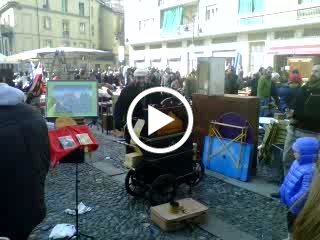
The flea Market in Turin, on a Sunday 

Il mercato delle Pulci a Torino, una Domenica 


Tuesday, 7 April 2015

Visita- Orientalism in Turin

Bazar in Konstantinople
Far off Eastern countries did not only attract archeologists and collectors but also visual artists. An example is Alberto Pasini (1826 – 1899) who, after attending schools of arts and after a period spent in Turin for his studies, was attracted by Orientalism, a romantic movement which was born after the Napoleonic expedition to Egypt and that increased with the expansion of European colonialism. In 1855 started his long journey with a French diplomatic mission through Turkey, Persia, Araby and Egypt. During this long trip he drew about 60 studies and many sketches which became paintings back in France and then in Italy.   


http://foglidarte.blogspot.it/2014/06/alberto-pasini-un-pittore-ottocentesco.html

Go to our Catalogue for Ebooks and Stories


Versione Italiana

Interior of a Mosque in Cordova
La curiosità verso terre lontane non spinse solo archeologi e collezionisti a viaggiare in oriente, ma anche artisti. Un esempio è il pittore parmense  Alberto Pasini (Busseto 3 settembre 1826 – Cavoretto , 15 dicembre 1899) che, dopo aver frequentato alcune scuole d'arte e avere soggiornato a Torino per studi, fu affascinato dal movimento Orientalista – nato nel 19° secolo in seguito alla spedizione di Napoleone in Egitto e all'espansione coloniale europea. Pasini intraprese un viaggio al seguito di una spedizione diplomatica francese verso Egitto, Turchia, Persia e Arabia nel 1855. Durante questo periodo eseguì circa sessanta disegni e molti schizzi che diventarono poi pitture quando ritornò in Europa, in Francia e poi in Italia.
http://foglidarte.blogspot.it/2014/06/alberto-pasini-un-pittore-ottocentesco.html

Tuesday, 31 March 2015

Visita- The detective of Mysteries in Turin

Per la Versione Italiana
The history of Turin's origin is so intriguing that also the famous archeologist Martin Mystere and his friends try to understand the secrets hidden in the esoteric town. Positive and evil forces will fight in the attempt to  understand the meaning of hermetic letters, to follow clues collected from witnesses and during surveys in vaults and caves leading to  hell. What is the link between Turin and the Egyptian Pyramids, explored only by bold archeologists and unscrupulous figures? In the centre of this mystery is a church: the Gran Mother.  The title of the adventure? Nea
Heliopolis

http://bonellieditore.fumetto-online.it/bonelli-editore-martin-mystere-133-nea-heliopolis-
c17740001330.php
http://www.comicvine.com/martin-mystere-133-nea-heliopolis/4000-279898/

Go to our Catalogue for Ebooks and Stories


Versione Italiana
La storia delle origini di Torino è talmente misteriosa da attirare anche Martin Mystere e i suoi accoliti per scoprire cosa si nasconde nella città esoterica per eccellenze. In Nea Heliopolis forze malvagie ed energie positive si combattono, cercando di svelare i segreti nascosti in ermetiche lettere, di carpire indizi sulle origini di Torino, indizi raccolti da testimoni e durante sopralluoghi in  grotte e sotterranei che aprono le porte degli inferi. Tutto questo e altro ancora uniscono la capitale piemontese alle piramidi che sorgono nel grande deserto egiziano con i  loro cunicoli esplorati solo da archeologi senza paura e da personaggi senza scrupoli. Eppure anche questo è Torino. Il centro di questo ennesimo mistero? Una chiesa, la Gran Madre.

http://bonellieditore.fumetto-online.it/bonelli-editore-martin-mystere-133-nea-heliopolis-
c17740001330.php
http://www.comicvine.com/martin-mystere-133-nea-heliopolis/4000-279898/

Go to our Catalogue for Ebooks and Stories

Tuesday, 24 March 2015

Visita- Il sogno verticale

Per la Versione Italiana
Mole Antonelliana 
Mole Antonelliana:  “a vertical dream.”
The Mole Antonelliana, Turin's landmark, is 167.5 meters in height - the tallest structure in all of Europe once. Begun  in 1863 by the architect Alessandro Antonelli from Novara,  the building was originally meant to be a synagogue but the Municipality of Torino bought it in 1878, under construction, and turned it  into a monument to national unity. The building was completed in 1889, not by Antonelli (who died the year before at the age of ninety and worked until his end) but by his son Costanzo.   In 1961, on the occasion of the celebrations for the 100th anniversary of the Unity of Italy, a panoramic lift was installed. Renovated in 1999 the lift  now takes visitors up to the “small temple” and the extraordinary 360° view from its balcony over the city.  There are no intermediate floors between the lift’s departure point at the 10 meter level and its arrival point, 85 meters higher up.

http://blog.turismotorino.org/utilities/ascensore-mole-antonelliana/
http://silvanadicristofano.blogspot.it/2014/07/la-mole-antonelliana-torino.html

Go to our Catalogue for Ebooks and Stories


 Versione Italiana
Mole Antonelliana. sezione
La Mole Antonelliana, simbolo di Torino, è alta 167,5 metri, e un tempo era considerata la più alta struttura in Europa. Iniziata nel 1863 dall'architetto Alessandro Antonelli di Novara, l'edificio originariamente avrebbe dovuto ospitare la sinagoga, ma il comune la comprò non ancora ultimata e la destinò ad essere monumento per l'Unità d'Italia. L'edificio fu completato nel 1889, non da Antonelli (che morì l'anno precedente novantenne e che lavorò fino alla fine) ma dal figlio COstanzo. Mel 1961, in occasione delle celebrazioni per il 100° anniversario dell'unità d'Italia, venne installato un ascensore panoramico. Rinnovato nel 1999 l'ascensore ora porta i visitatori al tempietto da dove possono godere di una vista straordinaria a 360° sulla città. Non ci sono piani intermedi tra il piano terra  a 10 metri di altezza e la cima, 85 metri più in alto.


http://blog.turismotorino.org/utilities/ascensore-mole-antonelliana/
http://silvanadicristofano.blogspot.it/2014/07/la-mole-antonelliana-torino.html

Go to our Catalogue for Ebooks and Stories

Tuesday, 10 March 2015

Visita- La Madama del Palazzo

Per la Versione Italiana
Maria Giovanna Battista
Who is the lady to whom Palazzo Madama in Turin is entitled’ She is Maria Giovanna Battista. Born in Paris, she moves to Turin at 21 years old , in 1665, following her husband the Duke Carlo Emanuele II from Savoia. In 1675 her husband dies leaving her with a nine year-old boy. She becomes the Ruling Queen and takes particular care to the development of cultural activities. When  her son comes of age,  she moves from Palazzo Reale to the Palace now named after her Palazzo Madama  and  asks architect Juvarra to build the marvellous staircase (1714).

http://www.palazzomadamatorino.it/news.php?id_news=355


Go to our Catalogue for Ebooks and Stories


Versione Italiana
Maria Giovanna Battista
Chi è la madama a cui il Palazzo al centro di Torino è intitolata?
Si tratta di Maria Giovanna Battista, nata a Parigi, ma trasferitasi a Torino nel 1665, a ventun’anni, in seguito al matrimonio con il duca Carlo Emanuele II di Savoia. Nel 1675, rimane vedova con un figlio, Vittorio Amedeo II, di soli nove anni. Deve quindi assumere la reggenza dello Stato, e lo fa ponendo particolare attenzione allo sviluppo della cultura durante tutto il periodo del suo governo. Al compimento della maggiore età del figlio e al passaggio del potere nelle sue mani, la duchessa trasferisce la propria residenza e la sua corte nel castello di Torino, avviando gli ammodernamenti del piano nobile e poi, nel 1714, affidando a Filippo Juvarra la realizzazione della grandiosa nuova scala.


Tuesday, 3 March 2015

Visita- Palazzo Madama

Per la Versione Italiana

Palazzo Madama
Where is the beating heart of Turin? It is in the centre of Piazza Castello, where Palazzo Madama stands in the middle of the square. It  is on the site of the antique gateway to the Roman castrum  ( 1st century BC,)  the Porta Decumana. It was a fortress, a castle and finally the official residence of two duchesses from the house of Savoy, regents for their sons. The palace started being named Palazzo Madama  in the 19th century:  in May 1848, the opening session of the Senate of the Kingdom of Sardinia approved the Savoy dynasty's intention to proceed with the unification of Italy. Inside Palazzo Madama today there is  Museo d'Arte Antica (Museum of Antique Art), over  70,000 works  from the medieval period to the Baroque. There are paintings, sculpture, illuminated manuscripts, majolica and porcelain, gold and silverware, furnishings and fabrics and among the masterpieces there are a manuscript written by Van Eyck and Antonello da Messina's Portrait of a Man in the Treasure Tower.
http://www.palazzomadamatorino.it/blog/


Go to our Catalogue for Ebooks and Stories


Versione Italiana
Interno di Palazzo Madama 
Ma il cuore di Torino dove si trova? Nel centro di Piazza Castello, a Palazzo Madama, sull’antica porta verso l’accampamento romano, la Porta Decumana. In passato fu fortezza, castello ed infine residenza di due duchesse della Casa Savoia, reggenti dei loro figli. Il Palazzo fu denominato Madama nel 19° secolo: nel maggio del 1948 la sessione di apertura del senato del Regno di Sardegna approvò l’intenzione della dinastia Savoia di procedere con l’unificazione d’Italia. All’interno di Palazzo Madama ora si trova il Museo di Arte Antica, circa più di 70.000 lavori che vanno dal periodo medioevale all’epoca barocca. Ci sono sculture dipinti, pezzi di argento e oro, manoscritti, ceramiche e porcellane, tessuti e, tra i capolavori, un manoscritto di Van Eyck e il Ritratto di Uomo di Antonello da Messina nella Stanza del Tesoro.
http://www.palazzomadamatorino.it/blog/

Monday, 16 February 2015

Visita- faith and religion


Per la Versione Italiana
Gran Madre
On the other side of the Po there is an  imposing Neoclassical church – La Gran Madre di Dio. It was designed by the  architect was Ferdinando Bonsignore to celebrate the end of Napoleonic rule and the return of the Savoy king Vittorio Emanuele the 1st (his statue stands in front of the steps) . The position on the banks of the River Po, the structure similar to the Pantheon , its peculiar dedication and  the occult symbols hidden inside have given rise to various legends.  Some historians date its origin to the Egyptian time: the church would stand on the site of a temple to the Egyptian goddess Isis  –the name Great Mother of God, refers to her. Also the two statues on either sides of the steps are curious: the one on the right represents  Religion and the other on the left Faith. Faith is holding a chalice which some believe to be a reference to the Holy Grail, the cup where Christ drank during his last supper and where Giovanni D’Arimatea collected his holy blood after Christ’s deposition. According to some stories the Grail  could be  buried nearby, some others maintain that the statue itself is looking at the place where the cup is hidden – but the eyes of Faith have no pupils.

http://italiainsolita.blogspot.it/2014/12/i-segreti-della-gran-madre-di-torino.html
http://www.duepassinelmistero.com/Gran%20Madre.htm

Go to our Catalogue for Ebooks and Stories


Versione Italiana
Faith and the Calice
Dall'altra parte del Po c'è un imponente chiesa neoclassica: La Gran Madre di Dio. Fu disegnata dall'architetto Ferdinando Bonsignore per celebrare la fine dell'epoca  Napoleonica ed il ritorno Emanuele 1°la cui statua è eretta davanti alla scalinata. La sua posizione sulla riva del fiume, la struttura somigliante al  Pantheon,  la sua particolare dedica e i simboli occultati all'interno hanno dato adito a molte leggende. Alcuni storici datano le sue origini all'epoca egizia: la chiesa sarebbe stata eretta sul luogo dove già si trovava un tempio dedicato ad Isis e, appunto, il nome Gran Madre si riferirebbe a Lei. Anche le due statue sui due lati della scalinata sono molto particolari: quella a destra rappresenta la Religione, quella a sinistra la Fede. La Fede tiene in mano un calice che si pensa sia un riferimento al Santo Graal, la coppa dove Cristo bevve durante l'ultima cena e dove Giovanni D'Arimatea raccolse il sangue di Cristo dopo la sua deposizione. Secondo alcune storie il Graal potrebbe essere sepolto lì vicino,;altri sostengono che la statua guardi verso il luogo dove il Graal sarebbe nascosto – ma gli occhi della statua non hanno pupille.
http://italiainsolita.blogspot.it/2014/12/i-segreti-della-gran-madre-di-torino.html
http://www.duepassinelmistero.com/Gran%20Madre.htm

Go to our Catalogue for Ebooks and Stories


Wednesday, 11 February 2015

Visita- Il Santo Graal

Per la Versione Italiana

The Saint Grail
land the Knights of the Round Table 

Turin is also the city of White Magic: it is the place where there is the Holy Sindone, the shroud which wrapped Christ's body in his sepulchre. It is said that Christ's relics are all together. If this is true, in Turin there is also the Saint Grail, the cup in which Christ drank during his last supper and Giovanni D’Arimatea collected his holy blood after Christ’s deposition. 


Go to our Catalogue for Ebooks and Stories


Two statues would testify this theory, the ones which stand on both sides of the steps of the Gran Madre, the large church built on the river Po's banks. The one on the right represents Religion and the other on the left Faith. Faith is holding a chalice which some believe to be a reference to the Holy Grail,. According to some stories the Grail could be buried nearby, some others maintain that the statue itself is looking at the place where the cup is hidden – but the eyes of Faith have no pupils.

https://www.google.com/maps/d/u/0/viewer?oe=UTF8&ie=UTF8&msa=0&mid=z-hVrj1D2sy4.khpGpHzBedA0

Go to our Catalogue for Ebooks and Stories


Christ during his last supper 

Torino è sì la città della magia nera, ma anche di quella bianca, la città dove c’è la sacra sindone. Secondo la tradizione esoterica, chi possiede una delle reliquie di Cristo le possiede tutte. La presenza della Sindone a Torino, quindi, garantirebbe alla città la presenza degli altri simboli della cristianità. Di qui la convinzione che a Torino si conservi anche il sacro Graal. 


Go to our Catalogue for Ebooks and Stories

La leggenda vuole che dopo il suo ritrovamento, i primi uomini lo lavorarono fino a farlo diventare un gradale, un calice, il Santo Graal, appunto, usato poi da Giuseppe D’Arimatea per custodire il sangue di Cristo dopo la crocifissione. Due statue a Torino, sarebbero la prova di questa esistenza. Una è la Fede, davanti alla Gran Madre, sulla sinistra, che impugna un calice con la mano destra e lo alza al cielo. 

Go to our Catalogue for Ebooks and Stories

L’altra sarebbe proprio in direzione dello sguardo di Fede, a Palazzo di Città, ove vi sono cesellati nel muro disegni raffiguranti altri calici. Secondo la giornalista storica Giuditta Dembech, autrice di “Torino città magica”, queste interpretazioni del mito del Graal non sono corrrette in quanto il calice non è un qualcosa di materiale, ma sarebbe la rappresentazione della conoscenza perduta dopo il peccato originario nel giardino dell’Eden.

www.torinocuriosa.it/curiosita.php?cdcur=22

Sunday, 8 February 2015

Visita- Nostradamus a Torino?

Per la Versione Italiana

Nostradamus


Maybe it is not well know that Nostradamus spent a period in Turin in 1556. He was probably called by Emanuele Filiberto from Savoy to help his wife have a baby. Nostadamus was said to be able to prepare a miraculous oil to cure sterility. He stayed in a fine villa outside the city, La Vittoria, later named Il Morozzo,  where  a commemorative stone was then found with the words: 

1556/ Nostradamus lived here, where there is Paradise, Hell and Purgatory. My name is Victoria; who gives me honour, will get glory, who blames me, will be ruined 


Nostradamus predicted the birth of the Duke’s heir but also the date of his death “when 9 will be before a 7”: Carlo Emanuele died just before his 70th birthday. But mystics state that Nostradmus came to Turin attracted by the famous alchemic caves. Besides, as stories go, in 1556 there was a great meeting of  the Priory of Sion, and Michael Nostradamus was its Great Monarch. 


Michael Nostradamus and his prophecies

Forse non tutti sanno che Nostradamus fu ospite di Torino, nel 1556! Era stato chiamato da Emanuele Filiberto di Savoia per aiutare la moglie Margherita di Valois ad avere un figlio. 


Nostradamus aveva infatti la fama di preparare un olio miracoloso in grado di combattere la sterilità e, a tale scopo, venne ospitato con discrezione nella villa La Vittoria denominata in seguito Il Morozzo dove è stata trovata una lapida con su incise le parole I556

    Nostre Damus a loge ici
     On il ha le paradis lenfer
     Le purgatoire ie ma pelle
      La victoire qvi mhonore
     Avrala gloire qvi me
    Meprise ovra la 
    Rvine hntiere

1556 / Nostradamus alloggiò qui dov'è il Paradiso, l'Inferno, il Purgatorio, io mi chiamo la Vittoria; chi mi onora avrà la gloria, chi mi disprezza avrà la completa rovina".

Nostradamus predisse al Duca la nascita dell'erede e ne specificò anche il nome, Carlo Emanuele. Disse anche che sarebbe morto "quando un nove si troverà davanti a un sette": Carlo Emanuele morì infatti a 69 anni, prima di compierne 70, e la profezia si avverò.Gli esoteristi sostengono, invece, che a muovere i suoi interessi fossero piuttosto le misteriose grotte alchemiche torinesi. Inoltre si ritiene che proprio a Torino ci fosse stata nel 1556 una riunione del Priorato di Sion di cui Michael de Nostradamus era il Gran Maestro

Wednesday, 4 February 2015

laNOTTE- Diabolik in Turin


Per la Versione Italiana


Diabolik's eyes


What people really do not know is that Turin has a negative record - it is the city with the largest number of unsolved women's murders.
And  it is Turin itself the place where the story of Diabolik was born: a man murdered a young worker and challenged the police naming himself Diabolich (without K).


Go to our Catalogue for Ebooks and Stories


It was Tuesday, February 25th, 1958, and the victim was a Fiat worker aged twenty seven, Mario Giliberti. he was found bloodless in the back of a shoemaker's shop at 20, Via Fontanesi. The weapon and the murderer were never found. There was a note on a wardrobe knocker: "You'll find the killer...".
The young man came from the South of Italy, she was engaged with a girl from Lodi where he had done his military service. In his poor room there was a lot of money, probably coming from a robbery or a usurer. The murderer provoked the police first with an anonimous call, then with a letter revealing the motive of the criminal action: revenge. But not much more.  

Go to our Catalogue for Ebooks and Stories

People started their chase and the investigations led to a comrade in arms of Giliberti - but the clues were not enough and he was soon set free.
In the  novel inspired by the case, 
Uccidevano di notte, by Italo Fasan, Diabolic (without h or k) was a poor actor, who, at the end of his life, had decided to take the law into his own hands. Only after four years the name of Diabolik appeared on the comic stip written and published by two wealthy sisters from Milan, Angela and Luciana Giussani - the creators of the diabolic robber.  


Versione Italiana
 
Diabolik and Eva 


Sapete che Torino vanta anche un record di cui farebbe volentieri a meno? E’ la città con il maggior numero di omicidi insoluti di donne.
Non solo, chi direbbe che proprio Diabolik – o almeno l’idea del personaggio – è nato qui? Sì, un Diabolik in carne ed ossa uccise un giovane a Torino e poi sfidò la polizia con una serie di lettere con la firma appunto di «Diabolich» (senza K, ma con ch). 

L’omicidio avvenne il 25 febbraio 1958, un martedì e la vittima era un operaio Fiat di 27 anni, Mario Giliberti, che fu ritrovato morto dissanguato, dopo essere stato colpito 11 volte e poi avvolto in un lenzuolo, sul pavimento della sua camera da letto al pianterreno, nel retro di un calzolaio in via Fontanesi 20, quartiere Vanchiglia. L’arma del delitto non fu mai ritrovata e nemmeno l’assassino, nonostante un indizio: sul pomello di un armadio c’era un biglietto lasciato a metà: «Troverete l’assas ...». Era morto da almeno dieci giorni quel giovane di origini meridionali, con una fidanzata a Lodi, dove era stato da militare. Gli inquirenti trovarono dei soldi, forse frutto di una rapina o presi da un usuraio. Sta di fatto che l’assassino, vedendo che nessuno si accorgeva del suo operato, telefonò lui stesso a La Stampa, annunciando di aver ucciso un uomo sulla via di Po. Ancora nulla … Allora inviò una lettera che, con un linguaggio da enigmista dilettante, rivelava l' indirizzo esatto e il movente: «Un tempo eravamo molto amici e portavamo la divisa comune, poi lui mi tradì come un cane. Adesso sta bene così che la mia vendetta, l’ha raggiunto. Spero che scopriate il cadavere prima che diventi marcio». 

Go to our Catalogue for Ebooks and Stories

Anche allora l’opinione pubblica si scatenò in una caccia all’assassino, e non solo in Italia. Per la verità né il delitto né le modalità erano originali: l’omicida si era ispirato a un romanzo giallo uscito circa un anno prima, Uccidevano di notte, di Italo Fasan, dove «Diabolic», senza l' acca, era un attore malato con pochi mesi di vita che aveva scelto di farsi giustizia da solo. Le indagini che seguirono portarono all’arresto di Aldo Cugini, un commilitone di Giliberti, bergamasco, ma gli indizi non riuscirono a portare una condanna. Però il delitto ispirò quattro anni dopo Angela e Luciana Giussani, ragazze bene di Milano, che crearono Diabolik, un fumetto tascabile comodo da leggere in treno per i pendolari. Le sorelle non confermarono né negarono mai l’ispirazione torinese del loro fumetto alimentando il mistero.
ricerca.repubblica.it › la Repubblica.it › 2008 › 02 › 
www.torinonightlife.com/.../l-enigmista-di-via-fontanesi-che-ispiro-il-fu...