

Saturday, 23 January 2016

Sunday, 17 January 2016

Friday, 8 January 2016
visita: Raffaello a Venaria
The exhibition of Raffaello's masterpieces in
Venaria Reale (Turin) shows the paintings and the works of the artist
which marked the main steps of his brilliant career- the people he
met (his father Giovanni Santi, Perugino, Pinturicchio, Luca
Signorelli , Leonardo and Michelangelo) and the different cities
where he lived.
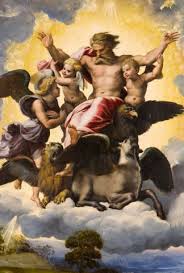
Le opere di Raffaello a Venaria Reale (Torino) mostrano i capolavori dell'artista che segnarono le tappe fondamentali della sua prodigiosa carriera: le persone che incontrò (suo padre Giovanni Santi, il Perugino, il Pinturicchio, Luca Signorelli , Leonardo e Michelangelo) e le città dove visse .
Le opere di Raffaello a Venaria Reale (Torino) mostrano i capolavori dell'artista che segnarono le tappe fondamentali della sua prodigiosa carriera: le persone che incontrò (suo padre Giovanni Santi, il Perugino, il Pinturicchio, Luca Signorelli , Leonardo e Michelangelo) e le città dove visse .
Wednesday, 6 January 2016
visita: i Magi a Torino

Nativity Scene in Turin - S. S. Annunziata Church
Presepe a Torino - Chiesa della S. S. Annunziata
Sunday, 13 December 2015
visita - il pane dei boia
Executioners once again...
The executioners inspired also the invention of pan carré....the bakers were quite disgusted to sell bread to executioners and showed their blame handing them out the loaves upside down. The hangmen were furious and wrote to Turin Major who proclaimed that the bakers had to give the bread on the right way. The bakers had an idea: they made a parallelepiped bread with four equal sides…….

Di nuovo i boia...che hanno ispirato anche i panettieri!
A Torino i panettieri erano disgustato dal fatto di vendere il pane ai boia. Dimostravano il loro dispregio porgendo loro le pagnotte al contrario. I boia si lamentarono con il sindaco che decretò che i panettieri dovevano porgere il pane nel senso giusto anche ai boia. I panettieri allora ebbero un'idea: fecero un pane a forma di parallelepipedo con tutti i lati uguali.......
Sunday, 22 November 2015
visita: hangmen and idioms

Many idioms date back to the Napoleonic period. Until 1863, the convicted were hanged in a square called Rondò della Forca (Circle of the Gallows); others were guillotined in Piazza Carlina (Carlina Square) - ironically called “Place de la Liberté” (Freedom Square), whereas in Piazza Castello (Castle Square ) and in Piazza San Carlo (Saint Charles Square) they were burnt at the stake or dismembered.The population hated the executioners as they were very well paid to kill. So they started swearing using the expression boia faus, in English damned hangman
Nel periodo Napoleonici al “Rondò della Forca”
fino al 1863 si tenevano le pubbliche impiccagioni; in piazza
Carlina, allora ironicamente “Place de la Liberté”, c’era
ghigliottina, nelle piazze San Carlo e Castello c’erano i roghi e
gli squartamenti. I boia erano mal visti dalla popolazione per il
loro mestiere e perché per uccidere, erano pure ben pagati. Da lì
il detto boia faus, o boia falso.
Sunday, 15 November 2015
visita - the executioner and ....
Do
you remember? Piazza Statuto is the heart of black magic in Turin.
Why? Because it stands in the West where the sun sets, because in Roman Times it was a necropolis (vallis occisorum ), because it was the centre of the cloaca, because it was the door to the hell, because it was the place of the gallows and because it was the area where the executioners lived ...and the executioners were wealthy, frightening and influential people once.
Yes, in Via Bonelli, the executioner of Turin lived - and walked around wearing black suits and carrying a bag with his tools. He exhibited a sort of price list: every torture and death had its price! In Via Barbaroux, in the Church Della Misericordia there is still the document with the names of people executed, their black hoods, the little glass (bicchierino) for the last drink and a crucified Christ: here the convict was blessed and then buried.
And there is story about the hangmen ...

Vi ricordate Piazza Statuto? il cuore della magia nera di Torino. Perché? Perché il sole tramonta ad Ovest e la Pizza è a Ovest, perché era stata la necropoli ed era stato il posto della claoca ai tempi dei Romani, perché era la porta dell'inferno, perché un tempo c'era la forca e perché nei pressi abitavano i boia di Torino...e i boia erano ricchi, influenti e temuti.
Già, in Via Bonelli viveva il boia di Torino - vestito di nero, si dice che girasse con una borsa dei "ferri del mestiere" e un listino prezzi per ogni differente tipo di uccisione. Nella chiesa della Misericordia, in via Barbaroux,ci sono ancora il registro dei condannati, i cappucci neri,il "bicchierino"dell'ultimo sorso e il crocifisso ed è qui che venivano benedetti e sepolti i giustiziati.
Why? Because it stands in the West where the sun sets, because in Roman Times it was a necropolis (vallis occisorum ), because it was the centre of the cloaca, because it was the door to the hell, because it was the place of the gallows and because it was the area where the executioners lived ...and the executioners were wealthy, frightening and influential people once.
Yes, in Via Bonelli, the executioner of Turin lived - and walked around wearing black suits and carrying a bag with his tools. He exhibited a sort of price list: every torture and death had its price! In Via Barbaroux, in the Church Della Misericordia there is still the document with the names of people executed, their black hoods, the little glass (bicchierino) for the last drink and a crucified Christ: here the convict was blessed and then buried.
And there is story about the hangmen ...
Già, in Via Bonelli viveva il boia di Torino - vestito di nero, si dice che girasse con una borsa dei "ferri del mestiere" e un listino prezzi per ogni differente tipo di uccisione. Nella chiesa della Misericordia, in via Barbaroux,ci sono ancora il registro dei condannati, i cappucci neri,il "bicchierino"dell'ultimo sorso e il crocifisso ed è qui che venivano benedetti e sepolti i giustiziati.
E c'è una storia che riguarda i boia....
Subscribe to:
Posts (Atom)